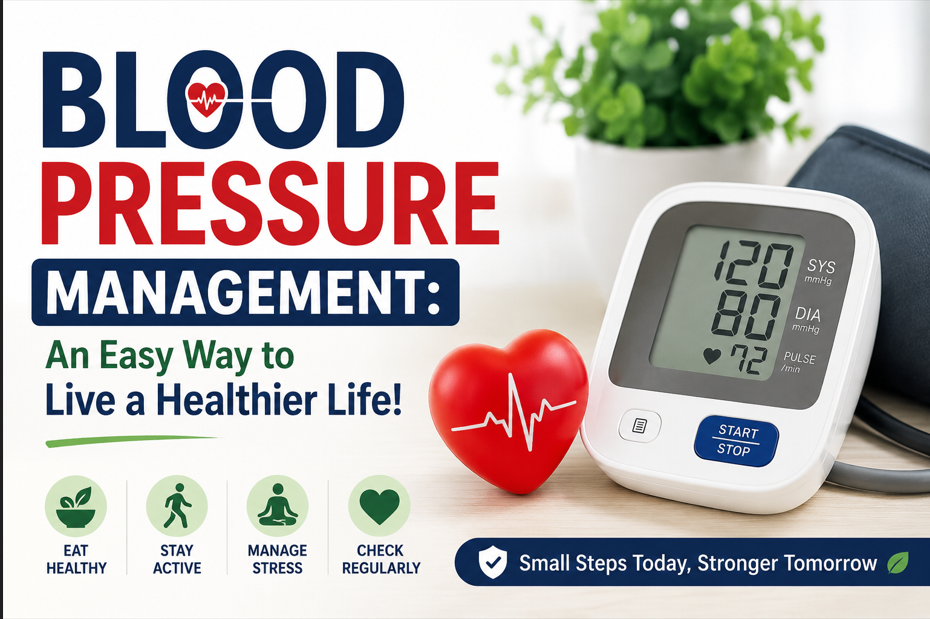
The force of your blood pressing against your blood vessel walls is known as blood pressure. However, prolonged high blood pressure can be dangerous for the human body. Hypertension, also known as high blood pressure, is a condition that can cause major health issues. You can maintain a healthy blood pressure range and lower your risk of heart disease, stroke, and kidney issues by changing your lifestyle and learning how your body functions.
A brief introduction about normal blood pressure
Two figures are used to measure blood pressure. Systolic pressure, which gauges pressure during a heartbeat, is the first (higher) figure. Diastolic pressure, which measures pressure when the heart is at rest in between beats, is the second (lower) figure.
- Normal: Under 120/80 mm Hg
- Elevated: less than 80 mm Hg, 120–129
- Stage 1 high blood pressure: 130–139 / 80–89 mm Hg
- Stage 2 high blood pressure: 140 or greater / 90 or greater
Why Is Blood Pressure Control Important?
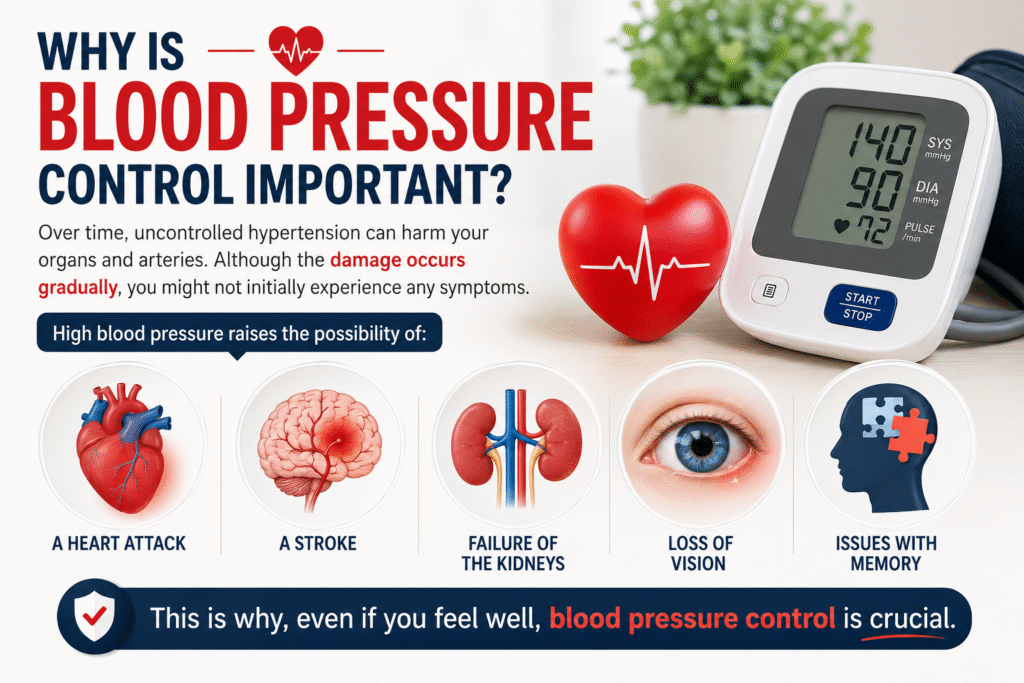
Over time, uncontrolled hypertension can harm your organs and arteries. Although if damage occurs gradually, you might not initially experience any symptoms. High blood pressure raises the possibility of:
- A heart attack
- A stroke
- Faliure of the kidneys
- Loss of vision
- Issues with memory
This is why, even if you feel well, blood pressure control is crucial.
How to Naturally Manage Blood Pressure?
Sometimes you don’t need medication right away. By choosing healthier options, many people can reduce or control their blood pressure. High blood pressure can cause Diabetes also. Here are a few easy yet efficient steps:
1. Consume a nutritious diet
- Your blood pressure is significantly impacted by the food you eat.
- Increase your intake of fruits and vegetables because they are high in fibre, vitamins, and minerals.
- Select whole grains over rice or white bread.
- Limit your intake of salt (sodium) because too much of it can cause blood pressure to rise. Reduce your intake of packaged or processed foods.
- Reduce your intake of sugar, particularly from sugary snacks and beverages.
- Consume lean proteins such as nuts, beans, chicken, and fish.
- One well-known strategy for regulating blood pressure with food is the DASH diet (Dietary Approaches to Stop Hypertension).
2. Continue to Be Active
- Being physically active strengthens and facilitates the heart’s ability to pump
- blood. Additionally, it lowers blood pressure.
- On most days of the week, try to get in at least 30 minutes of moderate exercise, such as swimming, biking, or brisk walking.
- Little adjustments like dancing, gardening, or using the stairs can make a big difference.
- Another important factor in blood pressure control is maintaining a healthy weight, which is facilitated by physical activity.
3. Maintain a Healthy Weight
- Your heart has to work harder when you are overweight. Even a modest weight loss of 5 to 10 pounds can have a significant impact on blood pressure.
- Consume smaller servings.
- Steer clear of late-night snacks.
- Instead of chips or candy, choose healthier snacks like fruits or nuts.
4. Restrict Alcohol Use
- Excessive alcohol consumption can cause blood pressure to rise
.
5. Give Up Smoking
Your blood pressure rises for a while each time you smoke. Smoking harms your heart and blood vessels over time. One of the best things you can do for your health is to stop smoking. Although it might not be simple, there are plenty of resources and support groups available.
6. Control Your Stress
Stress can raise blood pressure temporarily, and chronic stress can eventually lead to long-term problems. You must try these suggestions for lowering stress.
- You should breathe deeply or practise meditation.
- You should take a stroll or engage in some mild exercise.
- You should play some relaxing music.
- You should speak with a trusted person you know.
It is difficult to manage your stress while you are facing a lot of problems. By using all the above mentioned suggestions can improve your lifestyle and blood pressure management.
7. Make Time for Sleep
- Your risk of high blood pressure may increase if you don’t get enough sleep.
- Aim for 7 to 8 hours of sleep every night.
- Maintain a consistent sleep schedule.
- Steer clear of caffeine and screens right before bed.
- Your body heals and maintains equilibrium when you get enough sleep.
When to Consult a Physician?
It’s crucial to routinely check your blood pressure even if you take all of these precautions. It’s acceptable for some people to still require medication to regulate their blood pressure.
Consult your physician if:
- Your blood pressure is constantly elevated.
- Heart issues run in your family.
- You have chest pain, fatigue, or vertigo.
- You’re unsure of the best course of action.
A plan that works for your body and your life can be developed with assistance from your doctor.
How to Monitor Blood Pressure at Home?
Many people track their blood pressure readings by using home blood pressure monitors. You and your physician can use this to assess the effectiveness of your plan.
Advice for precise readings:
- Before checking, you should sit quietly for five minutes.
- Your arm should be at heart level.
- Avoid checking immediately after smoking, eating, or working out.
- Calculate the average of several readings.
Concluding remarks
Making drastic changes all at once is not necessary to control blood pressure. Begin modestly, start by improving one or two habits, then work your way up. Every action matters. Being consistent is more important than being flawless. Never forget that you have the ability to look after your heart. Blood pressure control becomes a part of a happy and healthy life with the correct information, routines, and support.
Take Charge, One Action at a Time
- You should eat healthily
- You should increase your movement
- You should reduce stress
- You should improve your quality of sleep
- You should keep in touch with your physician
Maintaining blood pressure control is a lifelong process, but it is worthwhile for your heart, your well-being, and your future.