
Introduction
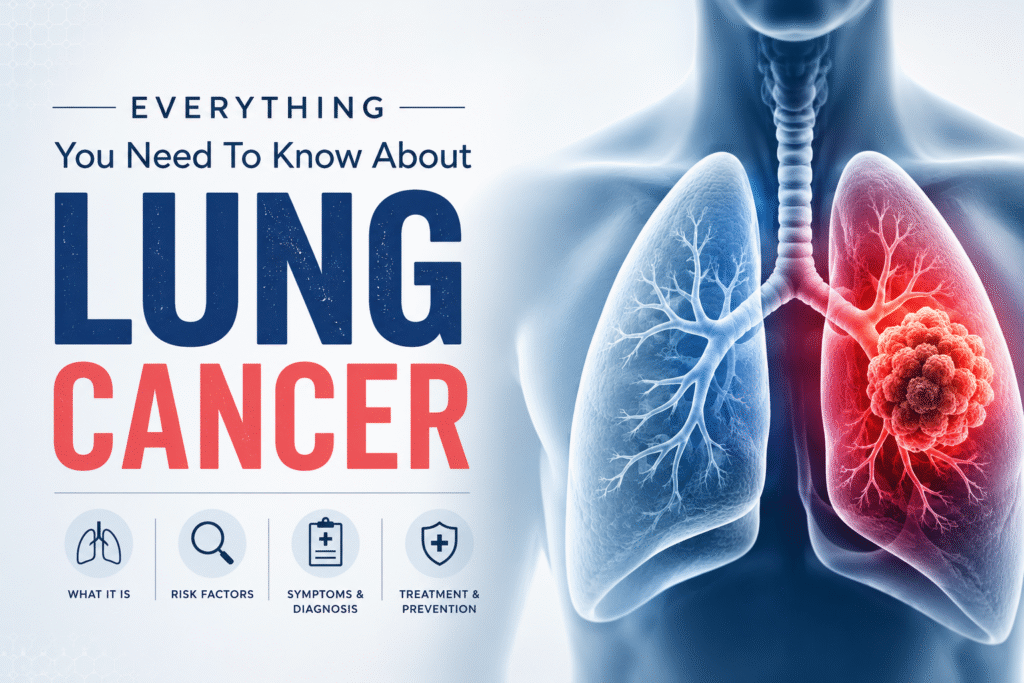
Lung cancer is one of the most common and dangerous types of cancer in the world, accounting for one of the leading causes of cancer-related mortality. The lungs are vital organs in the body, necessary for breathing and providing oxygen to the bloodstream. Genetic mutations in such cells in lung tissues lead to rapid, abnormal cell division, eventually resulting in the formation of a malignant tumor capable of infiltrating surrounding structures and metastasizing to distant parts of the body very much like in breast cancer. Since the symptoms are often very vague, such as a chronic cough, slight shortness of breath, or mild fatigue, they may be easily ascribed to less serious diseases or entirely symptom-free ones, and many are diagnosed at an advanced stage. This hostile, silent progression entails the urgent need for awareness and early detection. Knowledge of lung cancer, such as tobacco smoke, radon, and air pollution, its evolving signs and symptoms, together with the practice of specific prevention strategies, including smoking cessation and reduced environmental risk, fosters home and community plans that may yield life-saving measures through proactive education and timely intervention.
What Is Lung Cancer?
Lung cancer occurs when cancerous cells start to grow in the tissues of the lungs. These cancerous cells grow rapidly and spread to different parts of the body, including the brain, bones, and liver. This cancer is mainly seen in older patients, but it is also known to affect patients of any age.
There are two primary forms:
- Non-Small Cell Lung Cancer (NSCLC) – The more common type
- Small Cell Lung Cancer (SCLC) – it is usually more aggressive and grows rapidly
Causes of Lung Cancer
Cigarettes contain harmful chemicals that, over time, damage lung cells.
Other causes include:
- Passive smoking-smoking of smoke by others
- Air pollution, particularly in major cities
- Exposure to toxic chemicals such as asbestos, it is a natural gas found in some buildings.
- Family history of lung cancer
- Even people who have never smoked can develop lung cancer due to these factors.
Symptoms of Lung Cancer
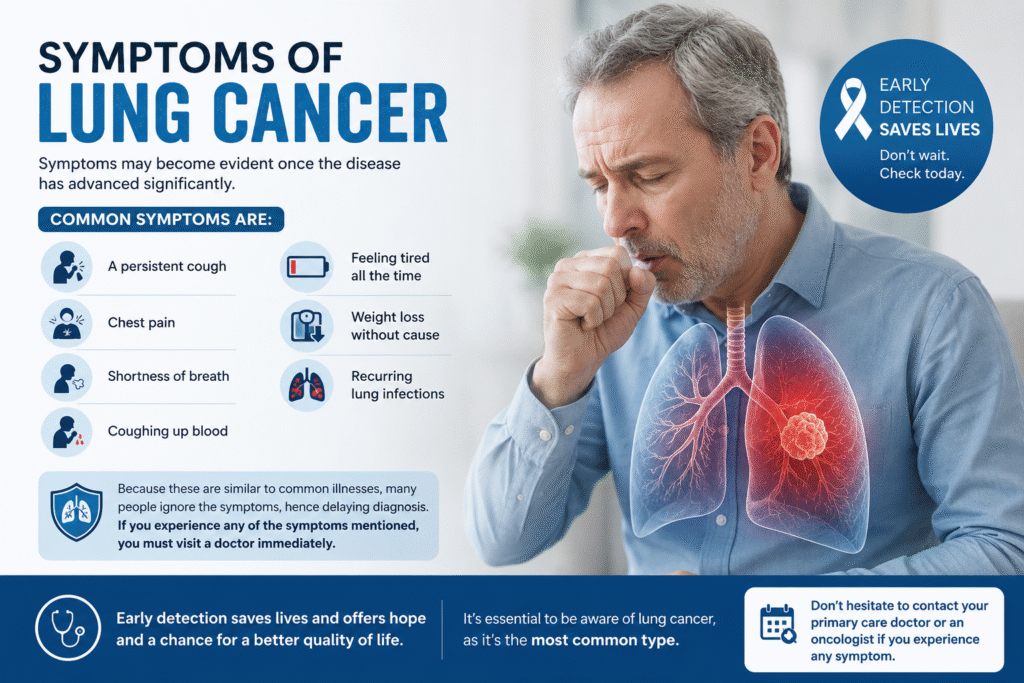
Symptoms may become evident once the disease has advanced significantly.
Common symptoms are:
- A persistent cough
- Chest pain
- Shortness of breath
- Coughing up blood
- Feeling tired all the time
- Weight loss without cause
- Recurring lung infections
Because these are similar to common illnesses, many people ignore the symptoms, hence delaying diagnosis. If you experience any of the symptoms mentioned, you must visit a doctor immediately. Early detection saves lives and offers hope and a chance for a better quality of life. It’s essential to be aware of lung cancer, as it’s the most common type. Don’t hesitate to contact your primary care doctor or an oncologist if you experience any symptoms.
Diagnosis of Lung Cancer
If you wonder what the diagnosis of lung cancer is, let’s go through it.
A pathologist examines this sample under the microscope for the confirmation of cancer and to identify its type, for example, either non-small cell or small cell lung cancer. A biopsy can be done by several methods: bronchoscopy, where a small tube goes down the throat; a needle guided by CT imaging; or by surgery.
No single blood test can diagnose lung cancer, yet blood tests are helpful. They may be used to assess overall health, detect markers that could indicate cancer activity, and help evaluate the function of healthy organs before treatments.
Early diagnosis is essential, as it broadens treatment options and improves the chances of success. People at high risk, like long-time smokers or former smokers, should discuss with a doctor about regular low-dose CT screening as a proactive step toward finding lung cancer in its earliest and most treatable stage, often before symptoms begin.
Stages of Lung Cancer
Lung cancer is divided into four stages, ranging from Stage 1 to Stage 4.
Stage 1 cancer is still within the lungs, while Stage 2 and 3 cancer has reached other adjacent tissues/regions, and Stage 4 cancer has reached other distant parts of the body. This knowledge of cancer stages enables cancer specialists to determine the appropriate course of treatment.
Risk Factors
- SMOKING
- RADON GAS
- SECOND-HAND SMOKE
- ASBESTOS
- AIR POLLUTION
- FAMILY HISTORY
Treatment of Lung Cancer
Treatment depends on the type and stage of lung cancer, as well as the patient’s overall health.
Common treatments include:
- SURGERY
- CHEMOTHERAPY
- TARGETED THERAPY
- IMMUNOTHERAPY
- RADIOTHERAPY
Many patients receive a combination of treatments for better results.
Prevention of Lung Cancer
Although not all cases can be prevented, the risk of lung cancer can be significantly reduced.
Prevention methods include:
- GET REGULAR CHECKUPS
- ENCOURAGEMENT
- AWARENESS
- DON’T SMOKE
- STAY AWAY FROM POLLUTANTS
- Keep in check, blood pressure and Sugar levels, which leads to mental stress and chances of cancer
Conclusion
Lung cancer can be a hazardous disease, but it happens to be one of the easiest to prevent as well as treat. However, smoking is still the most significant factor for lung cancer; on the other hand, some aspects of our environment are also responsible for lung cancer. These elements include radon gas, air pollution, and certain chemicals. Awareness and observation of symptoms such as a persistent cough, chest pain, and shortness of breath, along with healthier lifestyle choices like brisk walk, can significantly reduce your risk and improve your chances of survival. If we improve education and spread awareness and informed behavior, people and society can do much to prevent, detect, and improve lung health.