
Every day, we are making dozens of unconscious decisions about what we eat. A hurried breakfast, an afternoon snack, a late-night craving-all these brief moments seem harmless. But over time, they noiselessly design our health, energy, mood, and even our future. Eating habits are not simply related to your weight or the appearance of your body; they relate to how well your body and mind will function every day.
Knowing the difference between good and poor eating habits is taking responsibility for your health, not through fad diets, but through awareness and balance.
What Are Good Eating Habits?
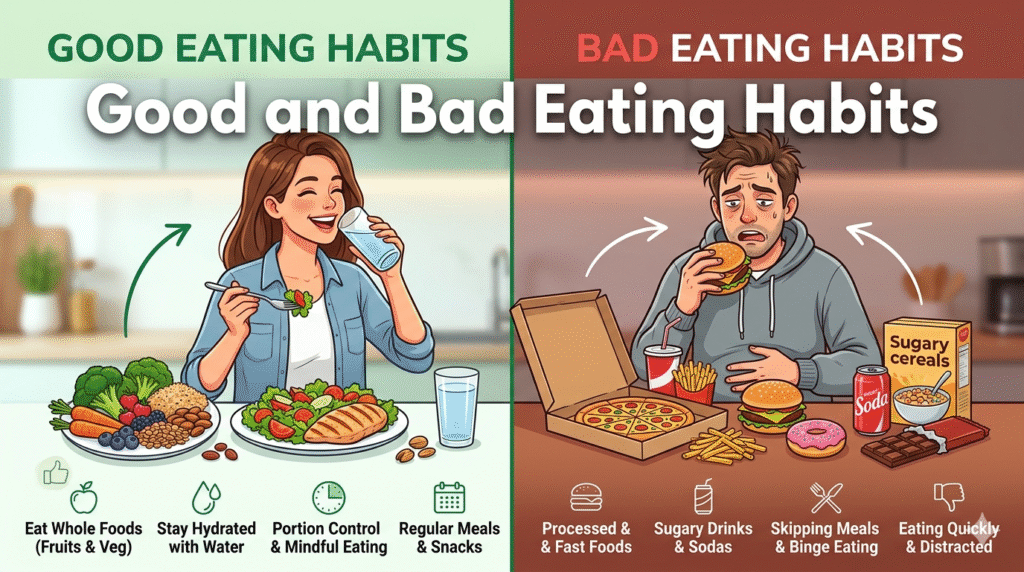
Eating well is not about being perfect. Eating well is about consistency, variety, and respect for your body. At its simplest, healthy eating habits consist of eating foods that will help your body. This includes fruits, vegetables, whole grains, lean proteins, healthy fats, and hydration. All of these food groups supply your body with the necessary nutrients that allow your organs to perform correctly.
- People with healthy eating habits commonly:
- Eat regular meals rather than intermittent fasting.
- Include a variety of foods in their diet.
- Pay attention to portion sizes.
- Drink sufficient water.
- Pay attention to the body’s hunger and fullness cues.
The most potent habit is regular eating. Skipping meals may seem like the best way to lose weight, but on most occasions, it works to your disadvantage. By skipping a meal, your blood sugar drops, which reduces your energy and prompts your body to overeat.
Another essential habit is mindful eating. This is where you eat, focusing on your food rather than the TV or other devices. Eating mindfully is necessary because when you do so, you will enjoy what you eat and will not eat too much.
Nutrient-dense foods are essential in regulating moods and reducing stress. Eating healthy helps fuel the body and the brain.
What Are Bad Eating Habits?
Bad eating habits often arise so quietly, especially in busy or stressful lives. They don’t always look that dramatic, but their long-term effects can be severe.
- Everyday bad eating habits include:
- Skipping meals-especially breakfast
- Eating excessive junk or processed food.
- Too much sugar and salt consumption
- Eating late at night regularly
- Emotional eating: usually defined as eating in response to stress, boredom, or sadness.
- Consuming sweet drinks instead of water
Processed and fast foods are made to be enjoyed by your tongue, not by your body. These foods tend to be rich in calories, saturated fats, refined sugars, and salt but nutrient-poor. This leads to an increased risk of obesity, heart conditions, diabetes, and hypertension.
One habit that is most damaging in the current era is the over-consumption of sugar in foods and drinks. It causes sudden peaks in blood sugar levels and dips in energy levels. This takes a toll on the body’s insulin production and could lead to type 2 diabetes.
Another destructive behavior is eating in response to emotions. It has become normal for many individuals to consume food due to stress, anxiety, and feelings of loneliness. Though eating may be comforting at the moment, it does not address emotions.
Late-night eating can also be an issue. Consuming large amounts of food close to bedtime can cause digestive and sleep problems, thereby affecting weight and daily energy levels.
How Bad Eating Habits Affect the Body?
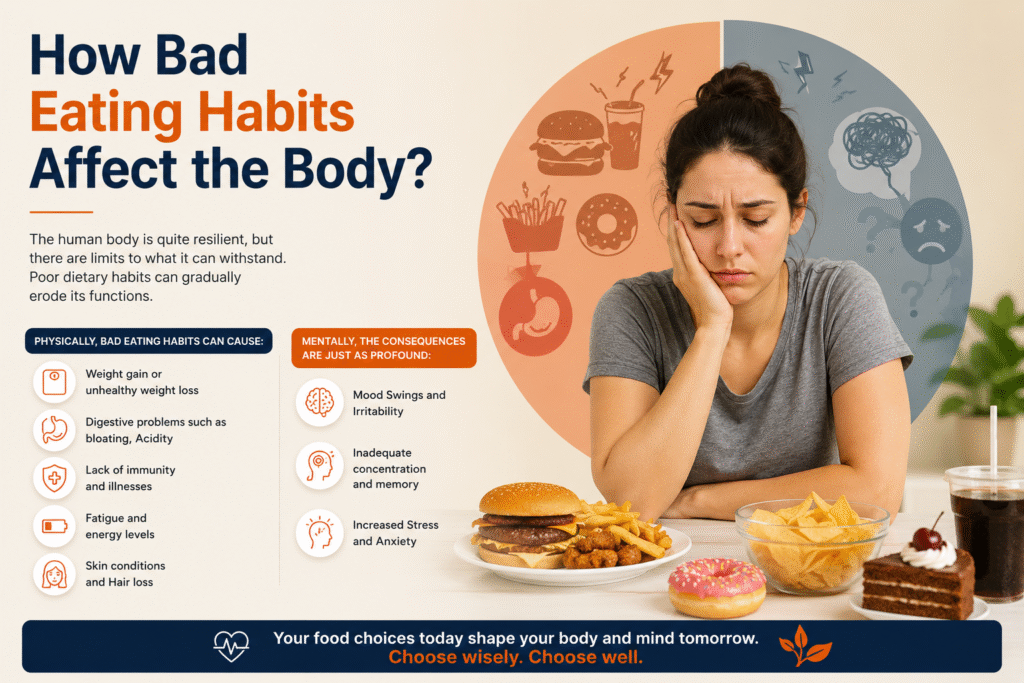
The human body is quite resilient, but there are limits to what it can withstand. Poor dietary habits can gradually erode its functions.
Physically, bad eating habits can cause:
- Weight gain or unhealthy weight loss
- Digestive problems such as bloating, Acidity
- Lack of immunity and illnesses
- Fatigue and energy levels
- Skin conditions and Hair loss
- Mentally, the consequences are just as profound:
- Mood Swings and Irritability
- Inadequate concentration and memory
- Increased Stress and Anxiety
Lack of motivation is something many people do not know about: food has a hormonal effect. Eating improperly can cause a person’s hunger hormones to become imbalanced, leading them to feel hungry even when they have enough energy.
Building Better Eating Habits
Dietary improvements do not necessarily have to be dramatic. The best approach is to make minor and practical changes.
Begin by adding, not subtracting. Add more veggies to your diet. Add fruits as snacks. Add water to your system before resorting to sweet beverages. Start adding healthy foods to your diet, and automatically, you will cut back on unhealthy foods. Besides if you do brisk walk then it would be very positive.
Plan meals when possible. Avoid impulse food decisions when you plan. Make healthy snacks accessible so that when you are hungry, you don’t make poor food decisions.
Forgiveness is another crucial step. Not everyone enjoys healthy eating all the time. Eating one bad meal doesn’t make your lifestyle one of poor eating. That’s all that matters to get back into eating well and feeling no guilt.
Above all, never forget that eating well is an act of self-respect, not self-punishment.
Conclusion
Good and bad eating habits start with what we eat every day, not with what we eat occasionally. What we eat today will affect what we feel tomorrow. And what we eat every day, every week, and every year will affect our health. You do not have to be perfect. You only need to be aware by choosing a diet that supports your body, you are choosing energy, vitality, strength, and a long lifespan.