
Honestly, this question feels a lot less crazy today than it did a few years ago.
There was a time when intelligent robots only existed in movies. You would see machines talking like humans, making decisions on their own, or taking over entire cities, and everyone knew it was just science fiction. Fun to watch, but unrealistic.
Now? Not so unrealistic anymore.
AI is suddenly everywhere. People use it at work, students use it for studying, businesses are depending on it, and some people are already worried it could replace jobs in the future. Every few months there’s another video online showing a robot walking, talking, serving coffee, or doing something that looks weirdly human.
Because of all that, people keep asking the same thing:
Are we actually close to building robots that think like us?
The answer is probably yes… and no at the same time.
Robots Are Smarter Than Before, But Not “Human Smart”
One thing people misunderstand is that modern robots are usually designed for very specific tasks.
A robot in a factory might work nonstop for 20 hours moving products from one place to another without making mistakes. That sounds impressive because it is. But take that same robot out of its environment and suddenly it becomes useless.
Humans don’t work like that.
A person can adapt almost instantly. You can walk into a new room, figure things out, notice emotions, understand danger, and make decisions without somebody programming every little action first.
Machines still struggle with basic flexibility.
That’s why I think people sometimes overestimate current AI.Just because it sounds intelligent doesn’t mean it understands what it’s saying.
A chatbot can answer questions smoothly, but that doesn’t automatically mean it’s conscious or aware.
The Human Brain Is Ridiculously Complicated
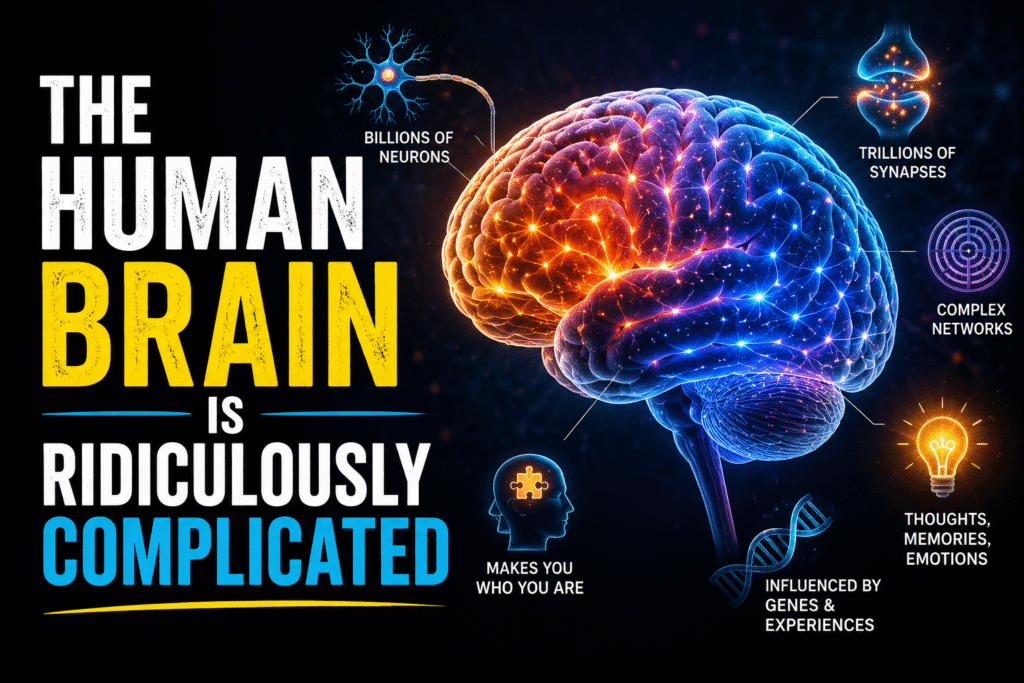
The more scientists study the brain, the more complicated it seems.
People often talk about intelligence like it’s just processing information quickly, but humans are much stranger than that. Emotions affect our decisions constantly. Memories affect personality. Even things like fear, humor, stress, or childhood experiences shape how people think.
Can a machine copy that?
Maybe partly.
But fully? That’s a different story.
Even now, researchers still debate what consciousness actually is. And if humans themselves don’t fully understand consciousness, recreating it artificially becomes incredibly difficult.
That’s one of the biggest problems with the idea of fully intelligent robots. We’re trying to copy something we still don’t completely understand ourselves.
AI Is Advancing Faster Than Most People Expected
At the same time, it’s impossible to ignore how quickly technology is moving.
A few years ago, AI-generated images looked terrible. AI conversations sounded robotic. Voice systems constantly misunderstood people.
Now some AI tools can create realistic videos, generate human-like writing, clone voices, and hold conversations that feel surprisingly natural.
That progress happened fast.
Too fast, honestly.
Even experts in the tech industry seem divided sometimes. Some believe artificial intelligence could eventually become smarter than humans in certain areas. Others think we’re still very far away from anything close to true intelligence. Even robots can be used in future, in electric transportation industry.
I think the reality is somewhere in the middle.
We’re definitely entering a future where machines become more capable every year. But human-level intelligence is probably much harder than people imagine.
Movies Have Changed People’s Expectations
A lot of public fear about robots and green technologies comes from movies.
For decades, films have shown machines becoming self-aware and eventually turning against humans. Because of that, many people assume advanced AI automatically leads to disaster.
Real life is less dramatic.
The bigger issue right now isn’t killer robots walking around cities. Things like automation taking jobs, or AI-generated misinformation, or privacy, or people becoming too reliant on technology, that sort of thing.
Those are real problems already happening.
And honestly, society still hasn’t figured out how to handle them properly.
Robots Still Lack Common Sense
This part is important.
Humans use common sense constantly without even thinking about it.
You know not to touch fire. You understand sarcasm in conversation. You can tell when somebody is uncomfortable even if they don’t directly say it.
Machines struggle badly with these things.
A robot might process millions of calculations per second but still misunderstand a simple real-world situation that a child could understand immediately.
That’s because humans learn from life itself, not just data.
People experience emotions, relationships, embarrassment, mistakes, and physical reality. AI learns patterns from information it’s given.
Those are completely different forms of learning.
Could Robots Become Conscious Someday?
Nobody really knows.
Some Scientists think that machines can never be more than simulations and not truly conscious.
I think, for me personally, this is where it gets philosophical, not just technological.
If a robot perfectly imitates human behavior, how would we even prove whether it’s truly conscious or just acting conscious?
That question sounds simple at first, but it gets complicated very quickly.
Right now, though, there’s no real evidence that AI systems actually experience emotions internally. They can imitate emotional responses extremely well, but imitation isn’t the same thing as feeling something.
A machine can say, “I’m happy to help,” without experiencing happiness at all.
Humans do.
That gap still matters.
The Future Will Probably Feel Strange
Even if fully intelligent robots are still far away, life is definitely changing.
AI tools are becoming normal incredibly fast. Children growing up today will probably interact with intelligent systems on a daily basis in ways their older counterparts never imagined.
Robots may eventually help in hospitals, elderly care, transportation, customer service, and dangerous workplaces. Some jobs will probably disappear while completely new industries appear in their place.
That usually happens whenever technology changes society.
People feared calculators once. Then computers. Then the internet.
Now AI is the next major shift.
The difference is that this technology feels more personal because it imitates human thinking itself.
So… Are We Close?
Closer than before, obviously.
But not close enough to say human-like robots are arriving next year.
Today, AI is impressive – sometimes even shocking – but true intelligence is so much more than answering questions quickly or generating realistic answers.
Humans have intuition, emotions, creativity, self-awareness, instincts, morality, and experiences shaped by real life. Machines still don’t possess those things naturally.
Maybe one day they will.
Or maybe consciousness is something uniquely human that technology can never fully recreate.
At this point, nobody honestly knows. And that uncertainty is probably the most interesting part of the entire conversation