
Introduction
I recall the first time I heard a doctor drop “nanotechnology” casually in the context of cancer treatment.
It wasn’t in a lecture hall or a science documentary. It was during a conversation that had nothing to do with futuristic medicine at first, just a routine talk about how difficult chemotherapy can be for patients.
Then he said something that stuck with me.
“We’re trying to send the drug exactly where it needs to go… nothing more.”
That sentence sounds simple, but the idea behind it isn’t.
Because for decades, medicine hasn’t really worked that way.
Medicine Has Always Been a Bit “Messy”
If you’ve ever taken medication for something like an infection or a headache, you already know this indirectly.
You take a pill, and it spreads everywhere in your body. Some of it reaches the target area. Some of it doesn’t. And some of it affects parts of your body you didn’t even want involved in the first place.
That’s why side effects exist.
We accept it as normal, but from a scientific point of view, it’s actually a compromise built into how medicine works.
One researcher once compared it to spraying water in an entire field just to water a single plant. It gets the job done… but it’s not efficient.
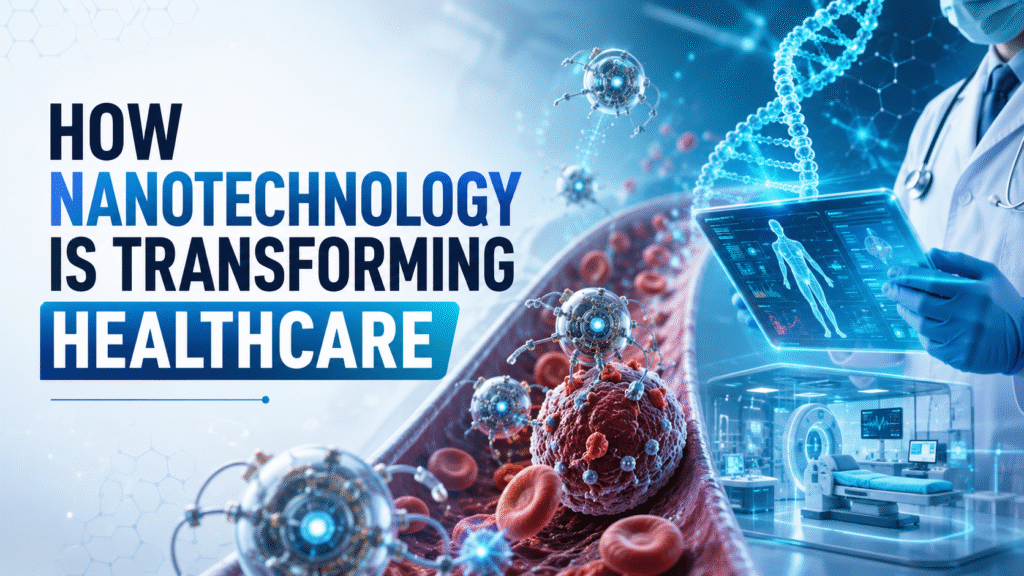
Nanotechnology is trying to change that entire approach.
The Strange World Where Size Changes Everything
When people hear “nano,” it almost sounds abstract like a branding word for advanced science.
But the reality is much more physical and, honestly, a bit mind-bending.
A nanometer is one-billionth of a meter.
That number is so small it stops meaning much until you try to compare it with something familiar. A single strand of hair? Tens of thousands of nanometers wide. A red blood cell? Still massive in comparison.
At that scale, materials don’t behave the way they do in everyday life. They start acting differently, sometimes unpredictably.
And that’s where scientists see opportunity instead of confusion. Even Nanotechnology is helping in removing food crisis.
Because if you can control matter at that level, you’re no longer just working around biology you’re interacting with it directly.
Cancer Treatment: Where the Stakes Feel Personal
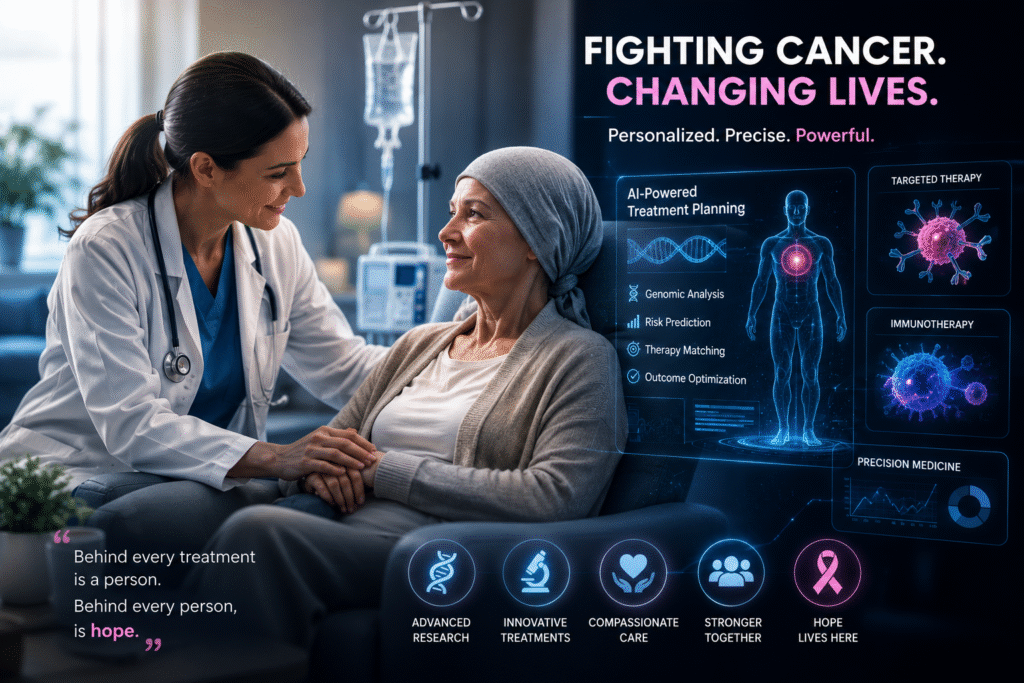
Almost everyone has some emotional connection to cancer. A family member, a neighbor, a friend. It doesn’t stay abstract for long.
And chemotherapy, for all its importance, has always carried a heavy reputation.
It works, but it doesn’t discriminate enough. It attacks fast-growing cells which includes cancer cells, but also healthy ones like hair follicles and digestive cells. Nanotechnology is helping humans intelligence to solve many unsolved questions.
That’s why patients often describe treatment as a battle in itself.
This is where nanotechnology research becomes deeply interesting, not just scientifically but emotionally.
Scientists are designing nanoparticles that act like microscopic carriers. They attach to drugs and help guide them closer to tumors.
Not perfectly. Not magically. But more precisely than before.
Imagine sending a courier who doesn’t just drop packages in a city, but actually finds the correct house even in a place with no clear street signs.
That’s the direction researchers are moving toward.
And even if improvements seem small on paper, in real patients those “small” improvements can mean fewer complications, shorter recovery periods, or simply more energy during treatment.
That matters more than people outside hospitals usually realize.
Diseases Don’t Wait for Symptoms
One of the most frustrating truths in medicine is that by the time something feels wrong, it may already be quite advanced.
Heart disease doesn’t usually announce itself early. Many cancers grow silently. Neurological conditions often begin long before diagnosis.
Doctors see this pattern constantly, and it’s one of the reasons early detection is such a major focus.
Nanotechnology is stepping into this space through what researchers call nanosensors devices capable of detecting extremely small biological signals.
Think of it less like a “test” and more like an early warning system that picks up subtle changes in the body’s chemistry.
Not dramatic changes. Not obvious ones. Just tiny shifts that would normally go unnoticed.
And that’s the key idea: catching problems before they become visible problems.
If that sounds simple, it isn’t. Biology is incredibly complex. But the direction of research is clear.
The Quiet Work of Healing
There’s another side of nanotechnology that doesn’t get as much attention: helping the body repair itself.
The human body already knows how to heal in many cases. Cuts close. Bones reconnect. Skin regenerates.
But not everything recovers cleanly.
Severe injuries, nerve damage, or degenerative diseases often overwhelm the body’s natural repair system.
Researchers are experimenting with nanomaterials that act almost like temporary support structures inside the body.
Not replacements for tissue, but something closer to scaffolding at a construction site.
Cells can grow along these structures, guided into forming healthier tissue.
It’s still experimental, but the concept feels surprisingly intuitive when you think about it: instead of forcing the body to heal alone, you give it better conditions to do so.
The Antibiotic Problem Nobody Talks About Enough
Antibiotics changed medicine more than almost any other discovery in history.
But there’s a problem growing underneath that success story.
Bacteria adapt.
The more they’re exposed to antibiotics, the more opportunities they have to evolve resistance.
Nanotechnology isn’t a silver bullet here, but it offers new tools.
Certain nanoparticles have natural antimicrobial properties. Others can help deliver antibiotics more effectively, reducing the amount needed.
It’s not about replacing antibiotics. It’s about making them smarter.
Where This All Leads
The interesting thing about nanotechnology is that it doesn’t feel like a single breakthrough waiting to happen.
It feels more like a slow layering of improvements.
A better diagnostic tool here. A more precise treatment there. A reduction in side effects somewhere else.
Individually, none of these changes sound revolutionary.
But medicine rarely changes through sudden leaps.
It changes through accumulation.
And at some point, you look back and realize the entire system works differently than it used to.
The Part Patients Will Never Think About
Most patients will never use the word “nanoparticle.”
They won’t need to.
They’ll just notice that treatments are easier than they used to be. That diseases are caught earlier. That recovery feels less punishing. Even AI is helping in spreading nanotechnology.
And maybe that’s the real measure of success here.
Not how futuristic the technology sounds.
But how normal better healthcare becomes.
Because in the end, nanotechnology isn’t trying to be noticed. It’s trying to work quietly in the background at a scale so small it disappears into the body, but with effects large enough to change lives.