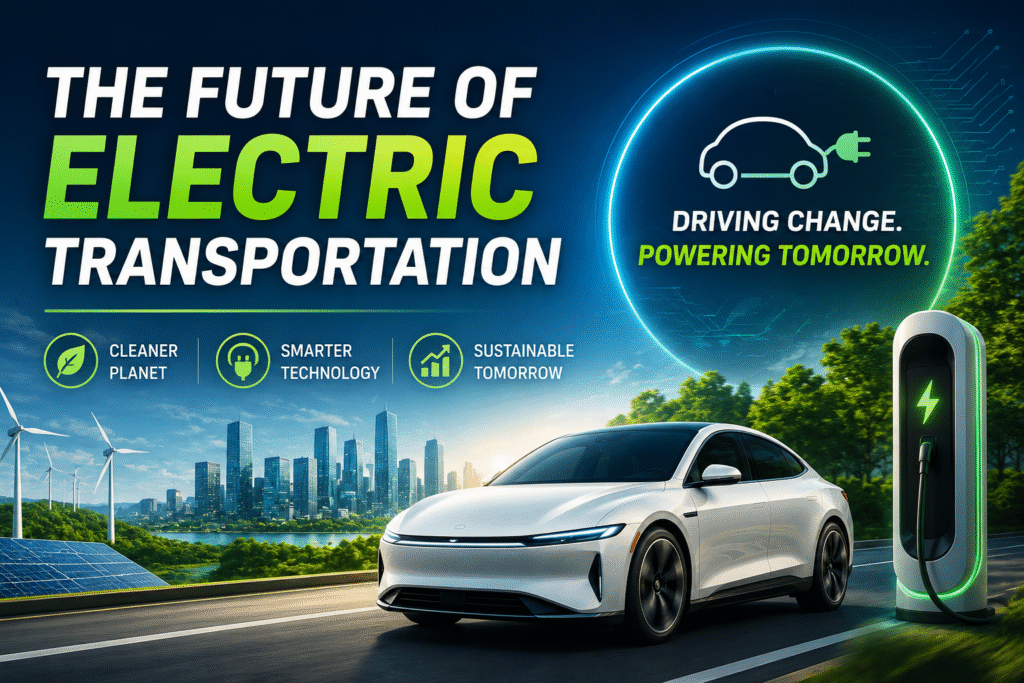

There was a time when the sound of a car starting was normal background noise. You didn’t think about it you just expected it. A turn of the key, a brief shake in the engine, and you were on your way.
That sound is slowly becoming less common.
Electric transportation is not arriving like a dramatic movie scene. It’s creeping in quietly one vehicle at a time, one city at a time until suddenly you realize the streets don’t sound the same anymore.
Not louder. Quieter.
And that silence is probably the first real sign that something big is changing.
The quiet takeover on the roads
Electric cars used to feel like a “future product.” Something you’d see in tech videos or parked outside a showroom with futuristic lighting. Now they’re just… normal traffic.
At first, people noticed the novelty. No engine noise. No vibration at idle. Just smooth movement. Then came the practical questions: range, charging, battery life.
But adoption rarely waits for perfection.
What’s interesting now is how fast perception has shifted. Electric vehicles are no longer “alternative.” In many cities, they’re becoming the default new purchase, especially for younger drivers who care less about engine size and more about charging speed, software, and cost per kilometer.
And honestly, once someone drives an EV for a week, the old arguments start feeling less important.
Batteries: the part nobody sees but everyone depends on
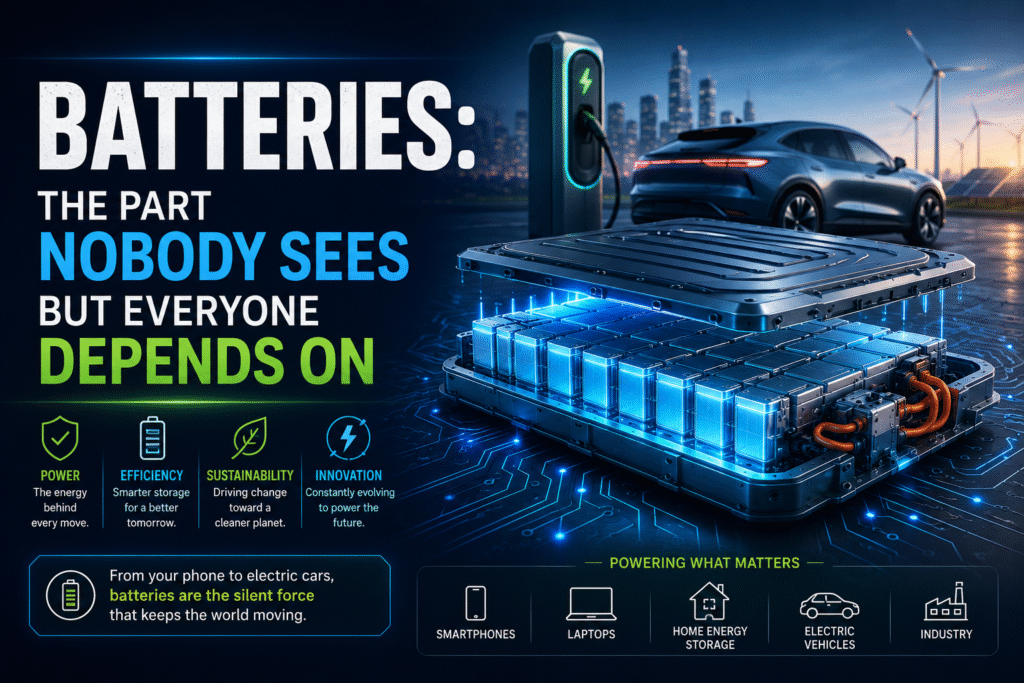
If electric transportation has a heart, it’s the battery and its a green technology. And if there’s one thing holding everything together and simultaneously holding it back, it’s also the battery.
Right now, most systems still rely on lithium-ion technology. It works well enough, but it comes with limitations: charging time, heat management, and the constant pressure on rare materials.
But this is where things get interesting.
Because the real competition isn’t happening in showrooms it’s happening in labs.
Solid-state batteries are the big hope. If they scale properly, they could change everything people complain about today: charging time, safety, and range anxiety. The idea of plugging in a car for a few minutes instead of waiting half an hour or more doesn’t sound futuristic anymore it sounds necessary.
There’s also a quiet push toward alternative chemistries like sodium-based systems, which don’t depend so heavily on scarce materials. That matters more than most people realize, because scaling electric transport isn’t just a technology problem, it’s a resource problem.
Cities are already changing shape
You can already see it if you pay attention.
Buses in some cities no longer rattle when they stop. Delivery vans move without the usual diesel noise. Motorbikes glide through traffic without the familiar smell of fuel.
Electric public transport doesn’t announce itself. It just blends in better.
And that might be its biggest advantage.
For cities, the appeal goes beyond climate goals. It’s also about noise reduction, maintenance costs, and air quality that people can actually feel. Anyone who has stood near a busy traffic junction in a major city knows what polluted air “feels” like even before seeing the data.
Electric buses, especially, are becoming one of the most practical shifts in urban mobility. They don’t require the same maintenance cycles, and they fit naturally into predictable routes.
The next step is integration systems where transport is not just electric, but also coordinated, optimized, and responsive in real time.
Aviation is the difficult frontier
Cars are easy compared to airplanes. That’s the honest truth.
Electric aviation sounds simple in concept, but physics doesn’t negotiate and here AI can play its role. Weight, energy density, and safety requirements make this a much harder problem.
Still, progress is happening but carefully.
Short-range electric aircraft are being tested for regional routes. Think smaller flights between nearby cities, not long international travel. It’s not about replacing everything at once. It’s about carving out the easier parts first.
Then there’s the more experimental side: air taxis and vertical takeoff vehicles. These ideas attract a lot of attention, but they are still early-stage in terms of real-world scaling. The technology is interesting. The infrastructure question is even bigger.
Where do they land? Who regulates them? How do cities adapt?
Those answers are still forming.
The real bottleneck isn’t vehiclesit’s infrastructure
This is where the conversation usually becomes less exciting but more important.
Electric transportation doesn’t work without electricity systems that can actually support it.
Charging networks are expanding, yes. But unevenly. Urban areas move fast. Rural areas lag behind. Highways are improving, but not uniformly across countries.
And then there’s the grid itself.
Because it’s one thing to replace petrol cars with electric ones. It’s another thing entirely when millions of them start charging at the same time during peak hours.
That’s why the future isn’t just about EVs. It’s about smart grids, renewable energy, and load balancing systems that don’t collapse under demand spikes.
Solar and wind energy will likely play a much bigger role than they do today not just for environmental reasons, but for stability.
What people don’t always talk about
There’s a hidden shift happening alongside all of this: how people think about ownership and mobility.
Electric transportation blends naturally with software. Updates. Connectivity. Data.
That changes the relationship between driver and vehicle. Cars are no longer just machines, they’re becoming platforms.
And that raises new questions. Privacy. Control. Dependence on digital systems. What happens when transportation is not just mechanical, but also computational?
We’re still early in that discussion.
So where does this actually lead?
If you strip away the hype and the criticism, the direction is still clear.
Electric transportation is not a trend. It’s a transition phase in a much larger system change.
It won’t happen evenly. Some places will be fully electric sooner. Others will take longer. Some technologies will succeed. Others will quietly disappear.
But the general movement is already locked in.
Fewer combustion engines. More electricity. Smarter infrastructure. Cleaner cities.
And probably, a future where we stop thinking of transportation as something loud, smoky, and mechanical and start thinking of it as something almost invisible. Just movement.