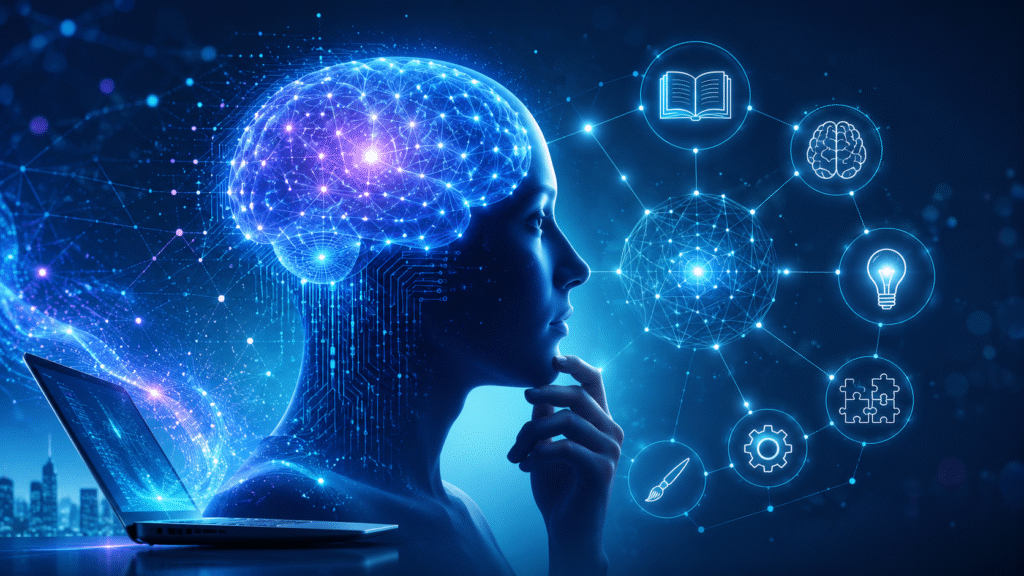

Sometimes I think people are too dramatic when talking about technology.
Every generation believes the next big invention is ruining society. Years ago, older people complained that television would destroy young minds. Before that, some people thought calculators would make students stupid because they would stop doing math manually. Today the same conversation is happening again, except now the target is smartphones, social media, and artificial intelligence.
But if we are being realistic, technology is not magically making humans smarter or dumber on its own. The real difference comes from how people use it.
A phone can either become a learning tool or a distraction machine. The internet can educate someone for free or waste their entire day. Technology can not decide the result by itself. Humans do.
Still, it is impossible to deny that modern technology has changed human intelligence in many ways.
Think about how people learned things twenty or thirty years ago. If someone wanted information, they usually had to search through books, ask teachers, or physically visit libraries. Finding answers took effort. Now information appears within seconds after typing a question online.
Honestly, sometimes it still feels crazy how normal that has become.
A teenager sitting in a small town with decent internet access can now learn skills that once required expensive institutions. Someone can study graphic design from YouTube, learn coding through online communities, or start understanding business from podcasts and free courses.
That kind of access matters.
In the past, many intelligent people probably never reached their potential because they lacked educational opportunities. Technology reduced some of those barriers. Knowledge is no longer locked away only for wealthy people or big universities.
At the same time, unlimited information created a new problem.
People consume too much content now.
Human brains were probably not designed to absorb endless streams of videos, notifications, news, opinions, and advertisements every single day. Many people wake up and instantly check their phones before their minds even fully wake up. Then throughout the day they keep jumping between apps, messages, and social media without giving their brains proper rest.
It becomes mentally exhausting after a while.
This is one reason why many people believe technology is hurting attention spans. These days it feels almost impossible to stay focused for long without some kind of interruption. Over time, this can make longer, focused activities—like sitting down to read a detailed article feel noticeably harder or less engaging.
You can actually see this pattern showing up in everyday life.
That cannot be healthy forever.
But blaming technology alone would be unfair.
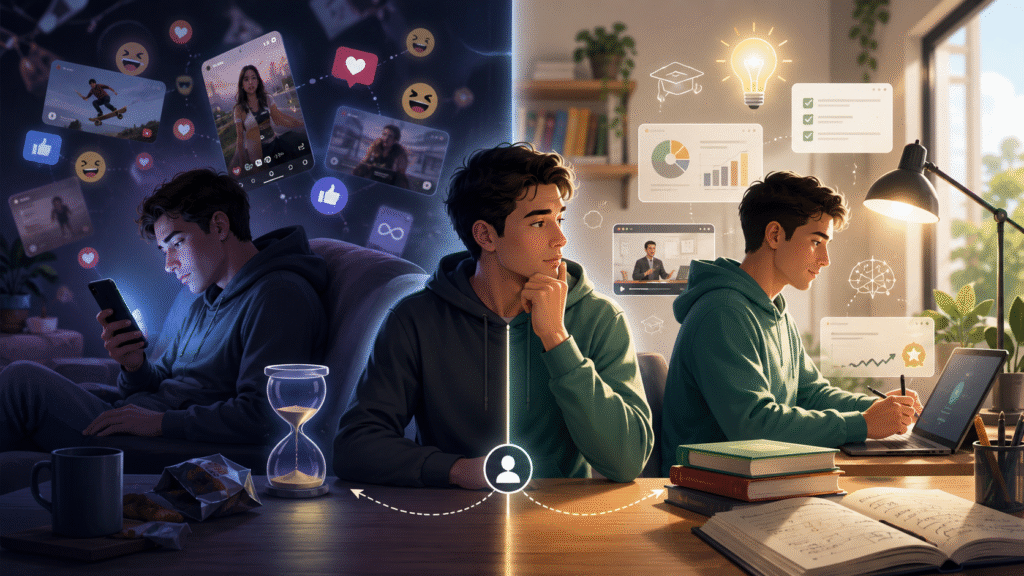
Humans choose these habits themselves. The same internet distracting millions of people is also helping millions learn valuable things every day. Some individuals spend hours watching meaningless content, while others use those same devices to study skills that completely change their lives.
That difference is important.
Artificial intelligence is another example where opinions are completely divided. Some people see AI as one of humanity’s greatest inventions. Others think it may eventually replace human thinking entirely.
Personally, I think people exaggerate both sides sometimes.
A lot of people already rely heavily on technology for simple tasks. Phone numbers are saved automatically. Maps handle navigation. Calculators solve equations instantly. Search engines answer nearly every question.
Because of this, some people argue humans are becoming mentally lazy.
Maybe there is some truth there.
People often jump straight to searching for answers instead of trying to think it through first. In the same way, students sometimes lean heavily on AI tools without fully understanding the underlying concepts.
Because technology has trained us to expect instant results, even the habit of patience and slow thinking feels like it’s fading in everyday life.
Still, humans have always adapted according to available tools.
When calculators became common, people worried math skills would disappear forever. That obviously did not happen. Instead, humans focused more on advanced concepts rather than repetitive calculations.
Another thing people forget is how technology improved global communication.
Years ago, learning from international experts was difficult for ordinary people. Today someone in Pakistan can attend online workshops from professionals in the United States, Europe, or anywhere else. Small businesses connect with worldwide customers. Students join global communities. Creative people share ideas instantly.
That level of connection changes how humans learn from each other.
Of course, the internet also spreads misinformation very quickly.
Fake news, edited videos, and manipulated stories tend to spread quickly because emotionally charged content naturally grabs people’s attention right away. In this kind of environment, intelligence today relies even more on strong critical thinking skills to separate fact from distortion.
In this environment, it’s important for people to question what they see online rather than accepting everything at face value.
Honestly, that may be one of the most important survival skills of the digital age.
The future will probably push humans and technology even closer together.
Artificial intelligence will continue improving. Automation will expand. Some researchers are already experimenting with brain-computer interfaces that sound almost futuristic.
Nobody fully knows where all this leads.
Maybe future generations will become dramatically smarter with technological assistance. Maybe they will struggle with dependency and distraction. Most likely, reality will include both advantages and disadvantages at the same time.
That usually happens with every major invention in history.
In the end, technology absolutely has the potential to improve human intelligence.
It already has in many ways.
However, technology remains merely a tool.Opportunities are more accessible than ever, learning is quicker, and communication is simpler.
A person can develop professionally, creatively, and intellectually by using technology responsibly. Instead, someone else who uses those same things irresponsibly might become mentally tired and constantly distracted.
The result is more dependent on human behaviour than on machines. Maybe the biggest question is not whether technology can improve intelligence. Maybe the real question is whether humans are disciplined enough to benefit from technology without becoming controlled