
If you’ve ever tried selling something online, you already know one thing very quickly traffic is everything.
No traffic = no sales. Simple.
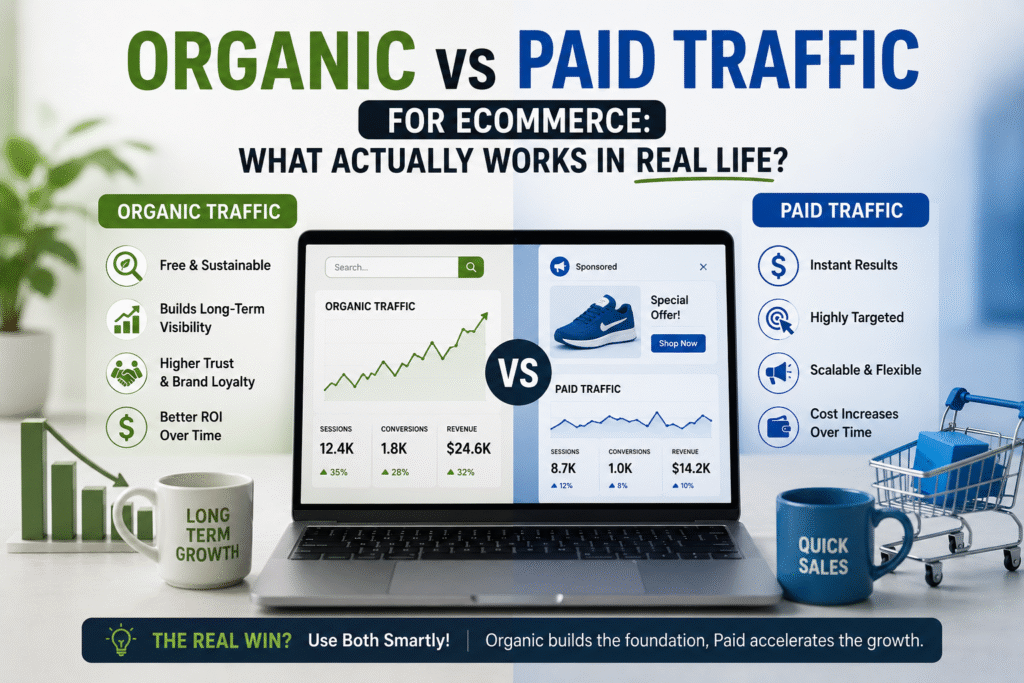
But then comes the real confusion: should you build traffic through SEO and content, or just run ads and get instant visitors?
Most people think this is a technical marketing debate. In reality, it’s more like a business survival decision.
Because the type of traffic you rely on decides whether your store becomes a long-term brand… or just another shop that dies when ad costs go up.
Let’s talk about it in a real, practical way, no textbook theory.
Paid Traffic: The “Instant Results” Game
Paid online traffic is what most beginners start with, and honestly, it makes sense.
You run ads on Facebook, Instagram, TikTok, or Google, and suddenly people start visiting your store. Sometimes even buying the same day.
That feeling is addictive.
It feels like you’ve figured it out.
But here’s what usually happens after that excitement:
You spend $100… you get $120 back… you think, “Great, let’s scale.”
Then you spend $500… and suddenly returns drop.
Then $1,000… and profit starts disappearing.
That’s when reality hits.
Paid traffic, which is also a measure of top selling products, works like renting a shop in a busy market. The moment you stop paying rent, your shop disappears. No matter how good your products are.
Still, paid ads are not bad. Not at all. They’re powerful when used correctly.
They help you:
Test products quickly
Get instant data
Generate early sales
Understand customer behavior
In the early stage of an eCommerce store, paid traffic is almost unavoidable.
But depending only on it? That’s where most people get stuck.
Organic Traffic: The Slow Builder That Changes Everything
Organic traffic is the opposite experience and it can help is pricing strategy as well.
No instant results. No sudden spike. Sometimes even frustration.
You write blogs. You optimize pages. You post content. And for weeks, nothing really happens.
That’s usually where people quit.
But the ones who stay consistent slowly start noticing something interesting.
A blog they wrote 2 months ago starts bringing visitors every day.
A product page starts ranking on Google.
A video or post keeps sending traffic without any ad spend.
That’s when organic traffic becomes real.
Unlike ads, organic traffic doesn’t disappear when you stop working. It keeps building on itself.
It’s like laying bricks one by one. Slow at first, but eventually you have something solid that doesn’t depend on daily spending.
And the biggest advantage?
People trust it more.
When someone finds your store through Google instead of an ad, they already see you differently. It feels more natural, less “salesy.”
That trust often leads to better conversions.
The Real Difference Nobody Talks About
Most people compare organic and paid traffic based on speed and cost.
But the real difference is psychological.
Paid traffic is interruption-based. You’re showing up in someone’s feed or search because you paid to be there.
Organic traffic is intent-based. People are actively looking for something, and you show up as an answer.
That one difference changes everything.
Because intent-driven visitors are already halfway convinced. They’re not just browsing, they’re searching.
And that’s why SEO traffic often converts better in the long run.
Where Paid Traffic Becomes Dangerous
Paid ads don’t fail because they don’t work.
They fail because they create dependency.
Once a store sees sales coming from ads, they keep feeding ads. No content. No SEO. No long-term asset building.
Then three things start happening:
Ad costs increase
Competition grows
Profit margins shrink
And suddenly the business becomes fragile.
One bad month in ad performance can break everything.
That’s the hidden risk most people ignore in the beginning.
Where Organic Traffic Becomes Powerful
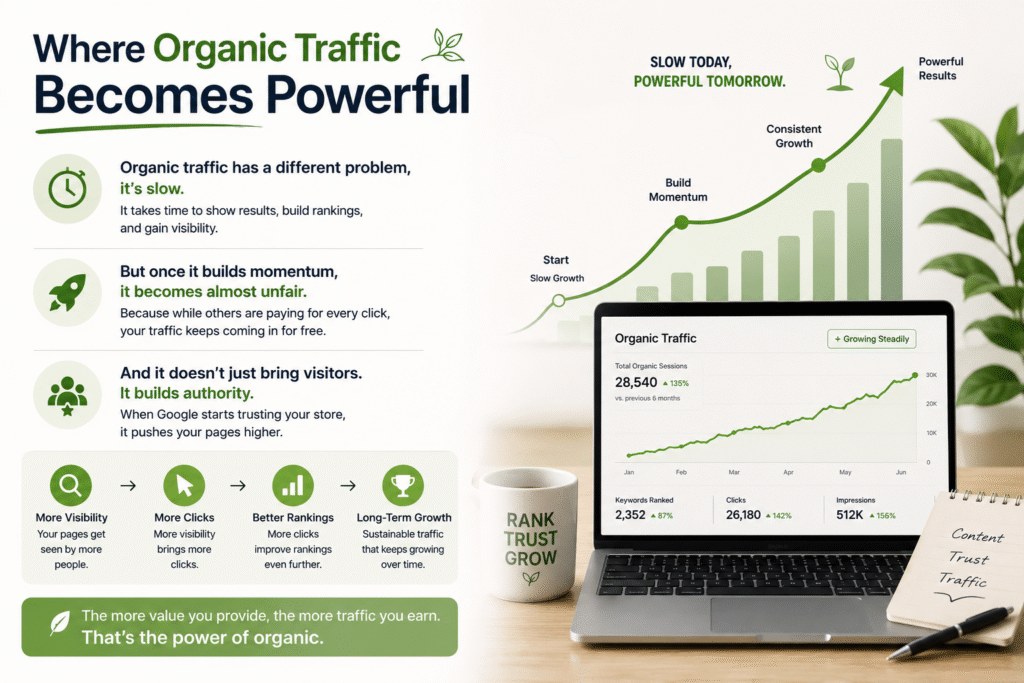
Organic traffic has a different problem, it’s slow.
But once it builds momentum, it becomes almost unfair.
Because while others are paying for every click, your traffic keeps coming in for free.
And it doesn’t just bring visitors. It builds authority.
When Google starts trusting your store, it pushes your pages higher. More visibility brings more clicks. More clicks improve rankings even further.
It starts compounding.
And compounding is something paid ads can never give you.
So Which One Actually Wins?
Honestly? Neither.
Because successful eCommerce stores don’t rely on one channel.
They use both but at different stages.
Early on, paid traffic helps you survive. It gives you data, sales, and direction.
But if you stay only on paid traffic, you’re always running.
You never build stability.
Organic traffic, on the other hand, is what slows everything down in a good way. It gives you breathing space. It reduces pressure. It builds long-term value.
A Smarter Way to Look at It
Instead of thinking:
“Organic vs PaidWhich is better?”
Think like this:
Paid traffic is for speed.
Organic traffic is for survival.
Paid gets you moving.
Organic keeps you alive.
One brings oxygen instantly. The other builds your lungs.
What Actually Works in Real eCommerce Businesses
If you look at real, stable eCommerce brands, they usually follow a pattern:
They start with ads to test products and get early sales.
Then they slowly build SEO content around winning products.
Over time, organic traffic starts replacing a portion of paid traffic.
Eventually, ads become optional, not mandatory.
That’s the stage where businesses stop feeling “stressful” and start feeling stable.
Final Reality Check
If you’re expecting a shortcut, neither organic nor paid traffic will give you that.
Paid traffic looks easy but becomes expensive.
Organic traffic looks slow but becomes powerful.
The real skill is knowing when to use each one and not depending blindly on either.
Because in eCommerce, the stores that survive are not the ones with the biggest ad budgets or the best SEO.
They’re the ones that stop depending on a single source of traffic. That’s the real game.