
Sometimes it feels like we’re already late. The summers are hotter, the weather is more unpredictable, and every year there’s another reminder that the environment isn’t doing great.
But at the same time, something interesting is happening. We’re also building tools that could help fix at least part of the damage. Not perfectly, not magically but enough to make a difference if they actually scale properly.
These are some of the green technologies that stand out right now.
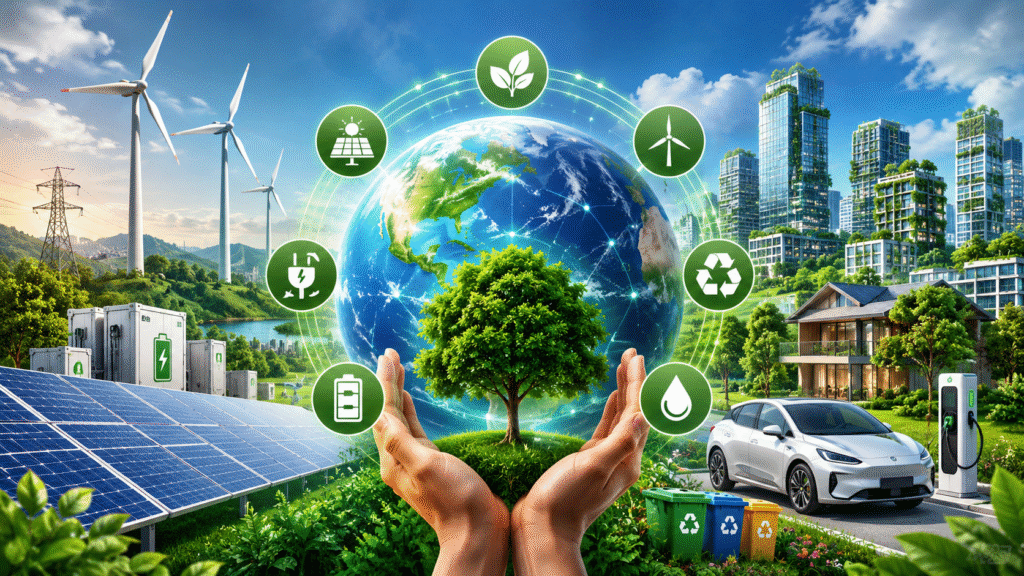
Solar energy: simple idea, big impact
Solar power is one of those things that makes you wonder why we didn’t focus on it earlier.
You just place panels where sunlight hits them, and they produce electricity. No noise, no smoke, no fuel.
What’s changed recently is cost. It used to feel expensive and “future tech,” but now it’s becoming normal in many places. Even small homes can run partially or fully on solar.
The biggest improvement, though, is storage. Batteries are getting better, which means solar energy doesn’t disappear when the sun goes down anymore. That one change makes the whole system much more useful.
Wind energy is simply a way of using the wind to create electricity. Wind energy is a pretty simple idea at first, but it’s pretty amazing when you see these huge wind turbines spinning together in massive wind farms.
Today, wind energy is used in many parts of the world to supply the power for cities and homes, especially in coastal areas where the winds blow more often. Wind turbines, too, have gotten smarter over time. They can adapt to the wind speed which reduces their energy consumption and increases their effectiveness.What’s even more interesting is that scientists are now testing floating wind farms in deep oceans, where the wind is usually stronger and more steady.
It’s still growing, but it’s clearly not a side experiment anymore.
Electric vehicles: the quiet shift on roads
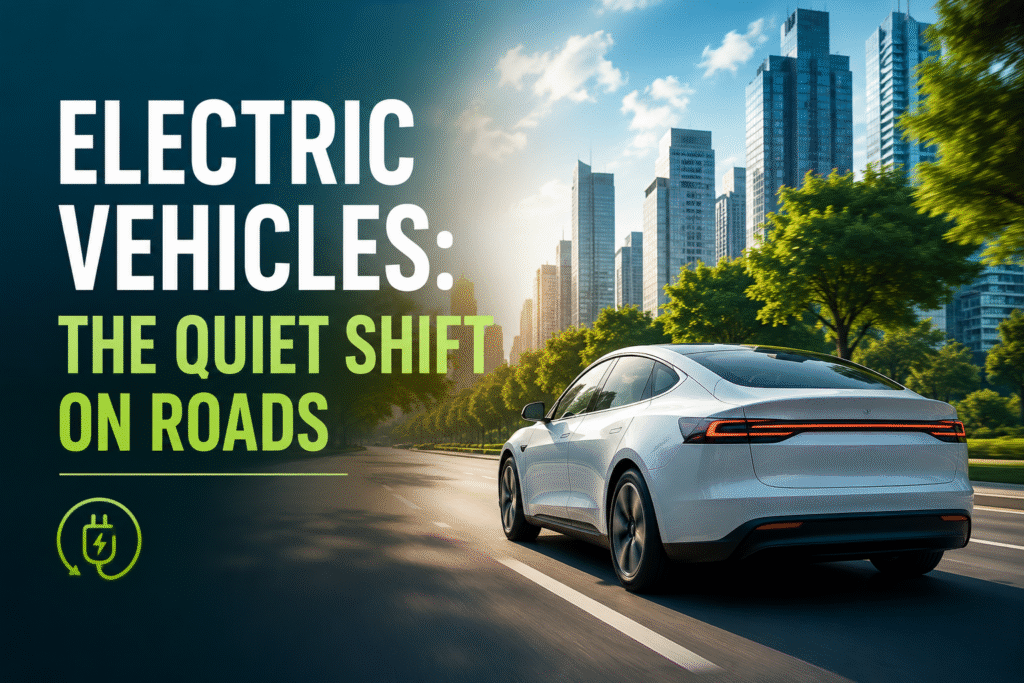
A few years ago, electric cars felt like a luxury or a “future idea.”
Now they’re slowly becoming normal.
The basic idea is simpleno petrol, no diesel. Just a battery that powers the motor.
Of course, it’s not perfect yet. Charging infrastructure still needs improvement in many countries, and battery production has its own environmental cost.
Electric vehicles are already helping reduce pollution more than petrol and diesel cars. It is very common especially in urban areas where there is always congested traffic and dirty air faced by residents.
And as electricity becomes cleaner, EVs automatically become cleaner too.
Green hydrogen: for the heavy stuff
Not everything can run on electricity easily. Planes, ships, and heavy industries need a lot of energy.
That’s where green hydrogen comes in.
It’s made using water and renewable electricity. When it’s used as fuel, it only produces water vapor.
No smoke, no carbon.
Right now it’s still expensive and not widely available, but countries are investing in it heavily because it could solve problems that batteries alone can’t.
Carbon capture: cleaning what’s already there
Even if we stop polluting today, the carbon already in the air will stay for a long time.
Carbon capture tries to deal with that.
Some systems trap carbon directly from industrial plants. Others try to pull it from the air itself.
The captured carbon can be stored underground or reused in materials like cement.
It’s not a perfect solution, but it feels like one of those “we need everything we can get” technologies.
Smart grids: making electricity less wasteful
Electricity systems used to be pretty basic power plants produce energy, and it gets distributed.
Smart grids change that.
They track energy use in real time and adjust the supply according to demand.
They also make it easier to mix renewable sources into the system, which is important because solar and wind aren’t constant.
Vertical farming: growing food differently
If you think about traditional farming, it takes a lot of space, water, and weather dependence.
Vertical farming flips that idea.
Crops are grown in stacked indoor layers, often in controlled environments. Less land, less water, and fewer chemicals means green technology can solve global food crisis.
It’s especially useful in cities where space is limited.
It won’t replace normal farming completely, but it can reduce pressure on agriculture in a meaningful way.
Biodegradable materials: fixing the plastic problem
Plastic is everywhere, and that’s the problem it doesn’t go away easily.
This problem is helped by biodegradable materials that break down naturally over time rather than hanging around for years.
They’re made from plant-based sources and are already being used in packaging and disposable products.
Still early stage, but it’s one of the more practical changes happening quietly in the background.
AI and the environment: a monitoring tool
AI isn’t just about chatbots or automation.
It’s also being used to track forests, predict climate patterns, manage energy usage, and even improve recycling systems.
Think of it as a tool that helps humans see patterns we normally miss.
It doesn’t solve problems on its own, but it helps make better decisions.
Final thought
There’s no single technology that’s going to “save the planet.”
But that’s not really how change usually works anyway.
It’s more like a collection of improvements solar here, electric cars there, better farming methods somewhere else all slowly adding up. And maybe that’s the real shift. This is not a quick fix and not a huge solution, but it is a small step to building systems that are less energy-intensive and more efficient.