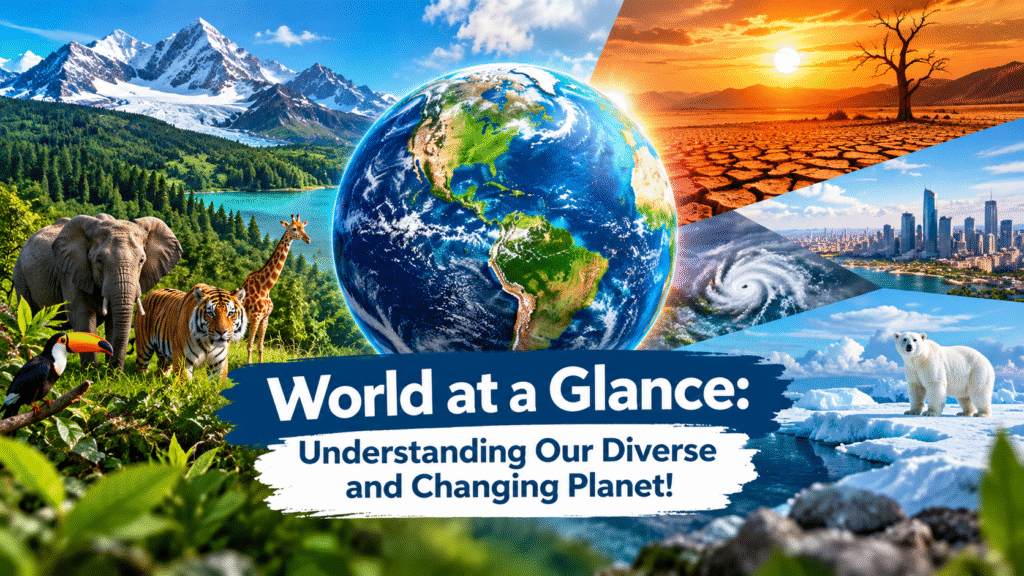

The world is vast and fascinating, home to billions of people, thousands of cultures, hundreds of countries, and countless landscapes. From bustling cities filled with skyscrapers to quiet villages nestled in the mountains, every part of the world has its own unique offerings. Taking a moment to look at the world “at a glance” helps us understand how people live, how countries are interconnected, and how our planet is continuously changing.
A World of Many Countries
There are nearly 200 countries in the world, each with its own government, traditions, languages, history, and identity. The sizes of these countries vary significantly. For example, Russia and Canada cover vast areas, while smaller countries like Singapore and the Maldives occupy much less land.
Every country has its own unique characteristics. Some are known for their ancient civilizations and historical monuments, while others excel in modern technology, beautiful landscapes, agriculture, or manufacturing. Despite these differences, countries are increasingly connected through trade, travel, education, communication, and technology.
National borders may separate countries geographically, but the movement of people, ideas, products, and information continues to bring communities closer together.
People and culture
The most remarkable thing about the world is its cultural diversity. People all across the world follow different traditions, costumes, and can speak thousands of languages. They have their own ways of living. From food, clothing, and music to architecture and art, all reflect different values. Celebrations may look different in every country, yet everyone brings families and communities together.
Modern communication has made it easier than ever to learn about cultures beyond our own. Through books, television, films, social media, and travel, people can explore different traditions and perspectives. This exploration can foster understanding and appreciation between communities. Learning about other cultures does not require abandoning our own traditions. Instead, it helps us recognize that there are many diverse ways to experience life.
Growing cities
Cities are becoming an increasingly significant part of the modern world. Millions of people live in large urban areas such as Tokyo, New York, London, Dubai, Mumbai, and Shanghai. These cities offer opportunities for education, employment, healthcare, business, and entertainment. They also serve as centers of innovation and technology.
Due to rapid urban growth, people are encountering numerous challenges, including traffic congestion, pollution, and waste management issues. Public services are under significant pressure as a result. Consequently, governments and communities worldwide are seeking ways to create a more sustainable living environment.
Communities worldwide are finding practical ways to keep cities clean, focusing on public transportation, green spaces, and renewable energy.
Technology Connects the World
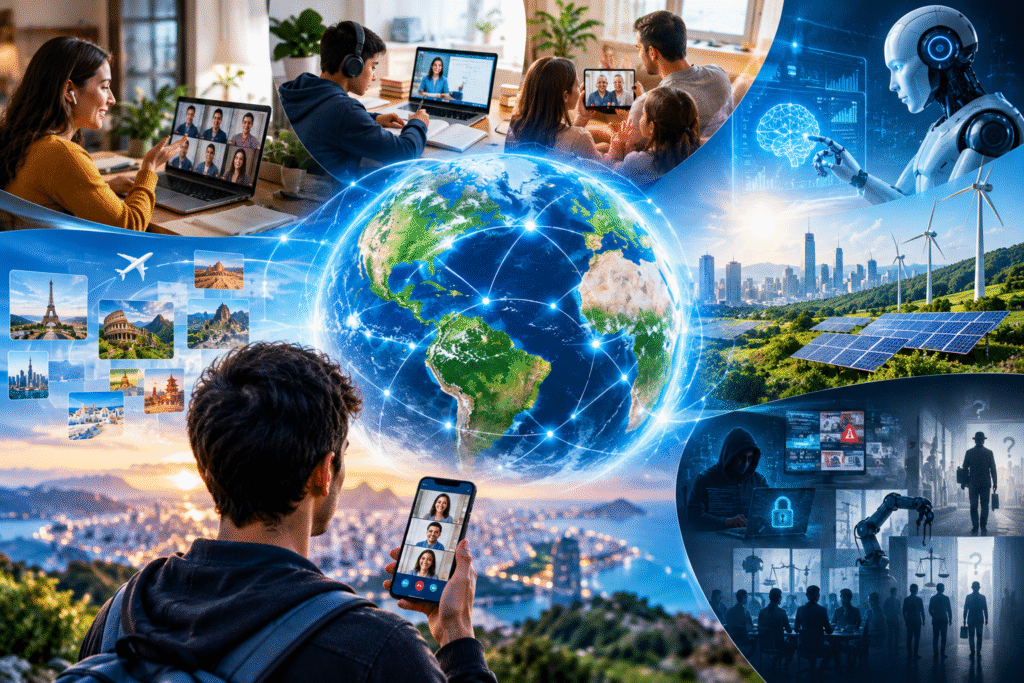
Technology is playing a significant role in transforming how people work and communicate. Now you can instantly send a message across the world with the help of the internet. It has become easy for businesses to have international clients, students can attend online classes, and families can stay connected even though they live far apart.
The internet has changed the way of living. A person with a smartphone can do anything he want. With the help of the internet, a person can easily explore the world.
Emerging technologies such as artificial intelligence, robotics, and renewable energy are transforming industries and creating new opportunities. However, these advancements also raise concerns about privacy, employment, misinformation, and the responsible use of technology. Striking a balance between innovation and responsibility will be a significant challenge for future generations.
Global Economy
There are numerous ways in which countries rely on each other. Products that are sold in one country can contain materials from multiple countries and be made in a different country prior to being sold.
International trade enables countries to trade food, clothing, electronics, machinery, energy, and other products. Tourism is also an important part of the world’s economies.
But not all people have an equal chance to get a job. In some countries, industry is well-developed, and the infrastructure is sophisticated, but in others, poverty, lack of educational opportunities, and basic services remain.
Reducing inequality is a key global challenge. Communities can enhance their life quality through education, healthcare, employment, and sustainable economic development.
A Shared Future
Humanity faces numerous challenges that cross national boundaries, despite the diverse languages, economies, and traditions of different countries. Often, no single nation can effectively address issues like climate change, pandemics, environmental protection, food security, and technological development on its own.
To find solutions, it is essential for scientists, communities, teachers, businesses, and governmental and international organizations to collaborate and fulfill their respective roles.
Young people are important stakeholders in shaping the future. The decisions they make, the knowledge they gain, and the ideas they develop can significantly influence the world they will inherit and pass on to future generations.
Environmental challenges
The planet is currently facing several environmental challenges, including climate change, pollution, deforestation, water shortages, and loss of biodiversity. Human activities have increasingly strained natural resources. Actions such as burning fossil fuels, deforestation, waste production, and changes in land use can harm ecosystems and contribute to environmental issues.
However, many countries are working toward a cleaner future. The use of solar and wind energy is growing, electric transportation is becoming more common, and conservation initiatives are being implemented to protect forests and wildlife. Personal decisions also play a role. Water conservation, minimizing unnecessary use, reusing what can be reused, energy conservation, and protection of natural areas are all part of a healthy environment.
Conclusion
This world is a remarkable combination of differences and connections because of various countries, cultures, languages, landscapes, and communities. At the same time, technology, trade, travel, and global challenges are connecting people more closely.
When we look at the world at a glance, we see that no country or community exists completely on its own. Understanding our planet involves appreciating its diversity and recognizing our shared responsibilities. By learning about each other, protecting the environment, using technology responsibly, and working together, we can help create a more peaceful, sustainable, and connected world for future generations.