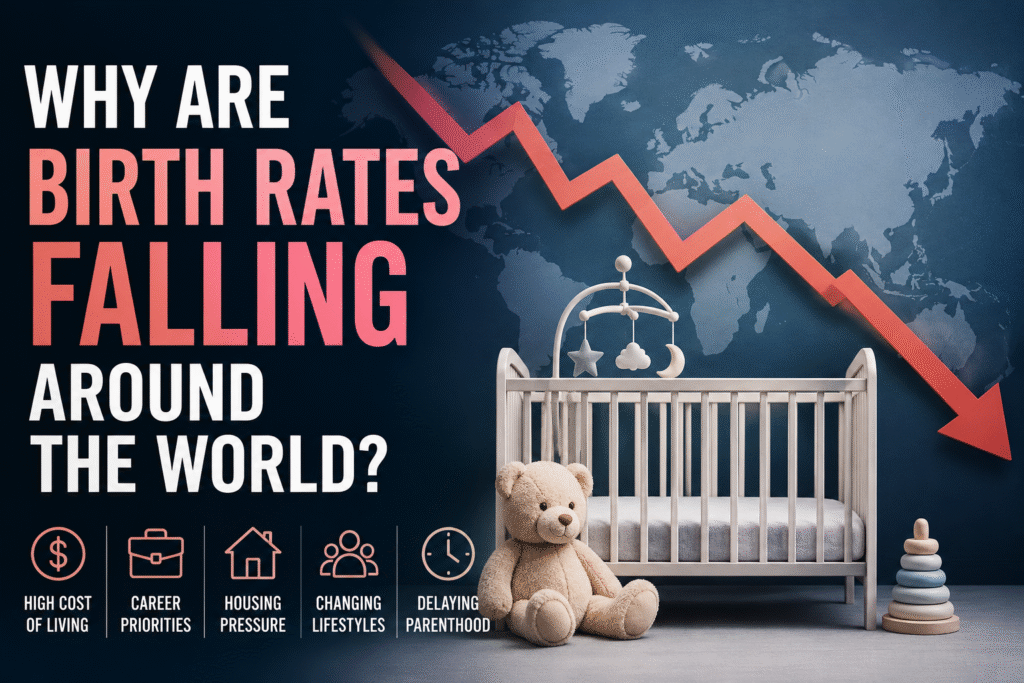

Birth rates are falling in many parts of the world, and this is becoming a big topic everywhere. A few decades ago, large families were very normal. In many homes, people had four, five, or even more children. Grandparents, parents, uncles, aunts, and children often lived close to each other, and family life looked very different from what we see today.
Now things have changed. In many countries, couples are having only one or two children. Some are delaying marriage. Some are getting married but waiting many years before having a baby. Some people are also deciding not to have children at all.
At first, it may look like people simply do not want families anymore. Many people still dream of having children. Many still want a home, a family, and a peaceful life. The problem is that modern life has made parenthood more difficult than before.
Having a child today is not just an emotional decision. It is also a financial decision, a career decision, a housing decision, and sometimes even a mental health decision. People now ask themselves many questions before having children. Can we afford it? Do we have enough space? Will my job be safe? Who will take care of the baby? Can we give our child a good future?
These questions show why birth rates are falling. It is not only about personal choice. It is also about pressure, cost, and uncertainty.
Life Has Become More Expensive
One of the biggest reasons people are having fewer children is money. Raising a child has become very expensive. Parents have to think about food, clothes, school fees, doctor visits, transport, rent, and many small daily expenses that keep adding up.
In the past, life was not always easy, but expectations were different. Children often grew up in larger family systems where grandparents and relatives pitched in. Schools were cheaper in many places. People did not spend as much on extra classes, gadgets, private healthcare, and modern lifestyle needs.
Many couples may want three children, but after looking at their financial situation, they stop at one. Some may even delay their first child because they feel they are not ready yet. This is one of the most common reasons birth rates are going down.
People Are Marrying Later Than Before
Another big reason is late marriage.People used to get married at a younger age in general for their healthcare. In many societies, getting married in the early twenties was normal. Today, many people wait longer.
There are many reasons for this. Some people want to finish their education first. Some want to build a stable career. Some want to earn enough money before starting a family and some wants to become billionaire first before having a child. Others simply do not find the right partner early.
When people marry later, they usually have fewer years to plan children. A couple that marries at 22 may have more time to have two, three, or four children. But a couple that marries at 32 or 35 may choose to have only one child, or sometimes no child.
Women Have More Choices Now
Women have more opportunity for education and work in the modern world and that is one of the biggest changes. More women are going to university, working in offices, starting businesses and becoming financially independent. That’s a good change but it has also changed the lives of families.
In the past, many women had fewer choices beyond marriage and motherhood. Today many women want to create their own identity. They want to learn, work, travel, make money, accomplish personal goals. Many still want children but they don’t want their whole life to stop after becoming mothers.
The problem is that society has not fully adjusted to this change. In many homes, women still do most of the childcare and housework, even when they also work full-time. This makes motherhood very tiring.
A woman may think, “If I have a child now, will my career suffer? Will I lose my job? Will I get support at home? Will I be judged for working after having a baby?” These are real concerns.
So falling birth rates are not because women do not care about family. In many cases, women are simply carrying too much pressure. If childcare is expensive, maternity leave is weak, and fathers are not equally involved, many women decide to delay children or have fewer of them.
Housing Is a Big Problem

Housing is another major reason behind falling birth rates. In many cities, buying a house has become very difficult. Even renting a small apartment can take a large part of a person’s salary.
Many young couples do not want to bring a child into an unstable living situation. If they are living in a small rented place, sharing a home with relatives, or moving from one house to another, they may feel it is better to wait.
Space also matters. Raising a child in a very small apartment can be stressful. Parents want a safe and comfortable place for their children.But when housing prices are too high, that dream gets more difficult.
This is one of the reasons for the especially low birth rates in many large cities. Cities bring jobs and better opportunities but life with family is costly. People may earn more in cities, but they also spend more on rent, transport, food, and basic living.
For many couples, the thought is simple: “First we need a stable home, then we can think about children.” But sometimes that stable home takes many years to achieve.
Children Are No Longer Seen as Financial Support
In the past, especially in farming societies, having more children was often seen as helpful. Children helped with work, farming, family duties, and later supported parents in old age. A big family was seen as strength.
Today, things are different. In modern cities, children usually do not help financially when they are young. Instead, parents spend money on them for many years. A child may need support through school, college, university, and even after graduation.
This has changed the way people think about family size. Parents now ask, “Can we give this child a good life?” instead of just asking, “How many children should we have?”
Many parents prefer having one or two children and giving them better opportunities. many choose smaller families. They may decide that one or two children are enough. Or they may wait until they are ready.
This does not mean family values are disappearing. It simply means people are making more careful decisions. Parenthood is now planned more seriously than before.
The Future Feels Uncertain
Many young people today feel unsure about the future. They worry about job security, inflation, climate change, political problems, war, and the general direction of the world. These worries affect the decision to have children.
Having a child is not a small responsibility. It is a long-term commitment. When people feel unstable in their own lives, they may not feel ready to bring a child into the world.
Some people think, “I am already stressed about my own future. How can I take responsibility for another life?” This feeling is becoming more common.
Mental pressure also plays a role. Life is faster now. People are more connected through phones and social media, but many feel more anxious and lonely. Work pressure is high. Competition is high. Everyone feels they must keep moving.
In this kind of environment, having children can feel overwhelming. Some people delay parenthood because they want to feel more peaceful and secure first.
Parenting Has Become More Demanding
Parenting today is not the same as it was in the past. Parents are expected to do a lot more. They are expected to provide good education, emotional support, healthy food, safe surroundings, digital safety, activities, and proper attention.
In the past, children often grew up more freely. They played outside, lived around relatives, and had a simpler lifestyle. Today, parents feel pressure from every side. They compare schools, check online advice, worry about screen time, and think about their child’s future from a very young age.
This makes parenting feel heavier. Some people look at this pressure and feel they are not ready. Others think they can manage one child but not more.
So even when people love children, they may choose a smaller family because they know parenting needs time, energy, and patience.
Culture Is Changing Too
Culture also plays a role in falling birth rates. In the past, marriage and children were considered the normal path for almost everyone. People were expected to marry and start a family. Today, people have more freedom to choose their own path.
Some people want to focus on their career. Some want to travel. Some want personal freedom. Some are unsure about marriage. Some do not want the responsibility of raising children.
This does not always mean people are selfish. It means life has changed. People now think more about personal happiness, mental peace, and quality of life.
Social media has also made people more aware of the difficult side of parenting. People openly talk about stress, lack of sleep, financial pressure, and relationship problems after having children. In the past, many of these things were not discussed openly.
Because of this, young people are more careful. They do not want to become parents only because society expects it. They want to feel ready.
What Happens When Birth Rates Fall?
Falling birth rates can create serious problems for countries. When fewer babies are born, the population slowly gets older. This means there are fewer young workers and more older people who need healthcare, pensions, and support.
A smaller workforce can affect the economy. Businesses may struggle to find workers. Governments may collect less tax. Healthcare systems may come under pressure because older populations need more medical care.
Some countries are already worried about this. They are trying to encourage people to have more children by offering child benefits, paid leave, childcare support, and housing help. But these policies do not always work if people still feel financially and emotionally insecure.
At the same time, falling birth rates can also reduce pressure on schools, traffic, housing, and the environment. So the issue is not completely simple. It has both positive and negative sides.
The real challenge is to create a society where people who want children can actually have them without feeling crushed by money, work, and stress.
Conclusion
Birth rates are falling around the world because modern life has changed. People are not simply rejecting family. Many still want children, but they are facing real problems.
Life is expensive. Housing is difficult. Jobs feel unstable. Women have more responsibilities but not always enough support. People marry later. Parenting feels more demanding. The future feels uncertain.
So instead of blaming young people, governments and societies need to understand the real reasons behind this change. If countries want people to have more children, they must make family life easier. That means better wages, affordable housing, cheaper childcare, flexible jobs, strong parental leave, and more support for both mothers and fathers. In the end, birth rates are not just about numbers. They show how people feel about life and the future. When people feel safe, supported, and hopeful, they are more likely to build the families they want.