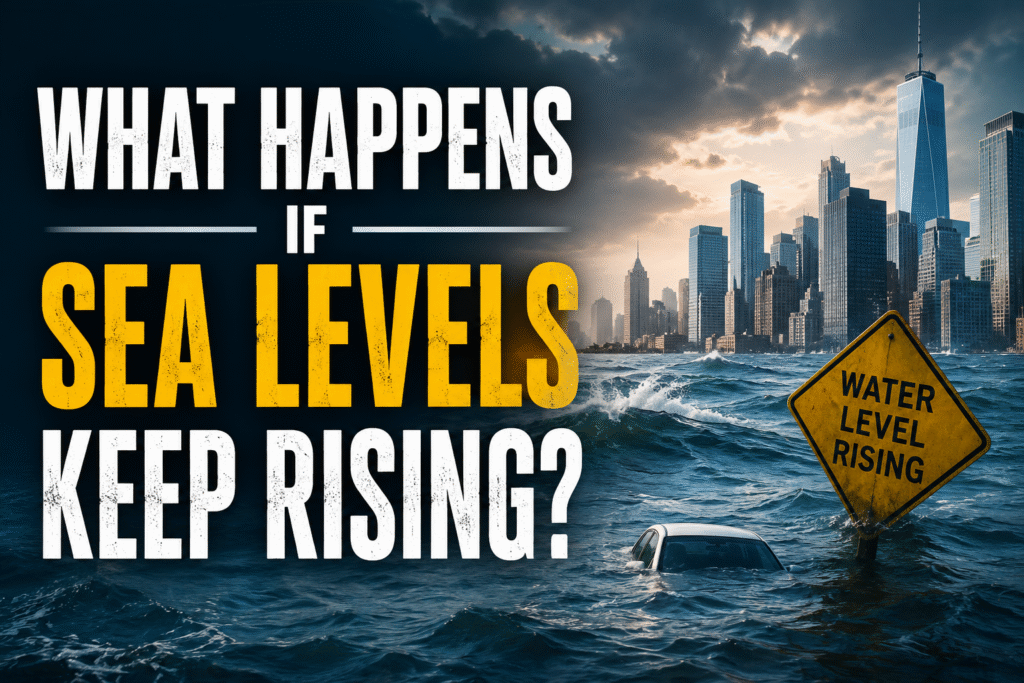

Most of us hear about rising sea levels and think it is something far away from our daily life.That sounds like a problem for scientists or governments or people who live on small islands. But sea level rise is not just a future problem, in fact. It is already becoming a slow pressure on many coastal areas around the world.
The sea does not always come like a big wave and destroy everything in one day. Sometimes it comes quietly. A little more water on the road after high tide. A beach that looks smaller every year. A house that floods during a storm when it never used to before. A farmer who notices the soil is not producing crops the same way. A family that slowly starts feeling unsafe in the place where they have lived for years.
That is what makes sea level rise so serious. It does not only change coastlines. It changes people’s lives.
Sea levels are rising mainly because the earth is getting warmer. Ice melting from the glaciers and polar regions adds water to the ocean. As seawater warms, it expands at the same time . Such changes may seem small but they add up over time and can cause serious problems for coastal cities, villages, farms and businesses.
More Flooding in Coastal Areas
The first thing a lot of people would notice is flooding. Some areas of the coast already flood during heavy rain, storms or high tides. But as sea levels rise, flooding can happen more often even when there isn’t a big storm.
At first, people may ignore it. They may say, “It is just a little water. It will go away.” But after some time, that little water becomes a regular headache. Roads start flooding again and again. Shops close for a few hours or a whole day. Children miss school. People going to work get stuck. Dirty water enters streets and homes.
For rich people, this is a problem. For poor people, it can become a disaster.
A poor family may not have money to repair the house every time water enters. They may not have insurance. They may not have another place to go. If floodwater ruins furniture, food, clothes, or a small shop, it can take months to recover. And when flooding happens again, the same family has to start from zero again.
Floodwater also brings health problems. Dirty standing water can increase mosquitoes, bad smell, infections, and waterborne diseases. So sea level rise is not only about water on the road. It can affect health, income, and daily peace of mind. Some cities will be under water by 2100.
Storms Would Hit Harder
Rising sea levels can also make storms more deadly. A storm can push water farther inland when the sea is already higher. This means areas that were once safe could begin to see flood damage.
Many countries in Asia are already familiar with the pain of floods and cyclones. Water is fast destroying homes and livelihoods and it’s been seen in Pakistan, Bangladesh, India, Indonesia, the Philippines and other coastal areas.. If sea levels keep rising, these storms can become even more damaging.
A storm does not only break houses. It breaks routine. It closes schools. It damages roads. It stops work. It destroys crops. It forces families to leave their homes. Sometimes they come back when the water drops but it’s all different. Walls are damp, furniture is ruined, documents are gone, the sense of security is gone.
This emotional damage is often overlooked. People talk about numbers, buildings and money but forget what it feels like when a family stands outside its own home and doesn’t know where to sleep that night.”
Some Families May Need to Leave Their Homes
If sea levels keep rising, some places may become too risky to live in, slowly. That doesn’t mean every coastal city is going to vanish tomorrow. . But some low-lying areas may become unsafe, too expensive, or too difficult to maintain.
Leaving home is never simple. A home is not just a roof and walls. It is memories. It is childhood. It is neighbors, streets, local shops, schools, mosques, temples, churches, family gatherings, and the place where people feel they belong.
For many Asian families, leaving ancestral land or an old neighborhood is very painful. People do not leave because they want to. They leave when life gives them no choice.
If floods keep coming, if drinking water becomes salty, if children keep getting sick, if roads are damaged, and if earning money becomes impossible, families may move inland or to bigger cities. These people may become climate migrants. They may not always be called refugees, but their struggle is real.
And moving does not solve everything. They need a new house, a new job, new school admission for children, new community support, and money to restart life. For poor families, this can be extremely difficult.
Possibility of drinking saltwater
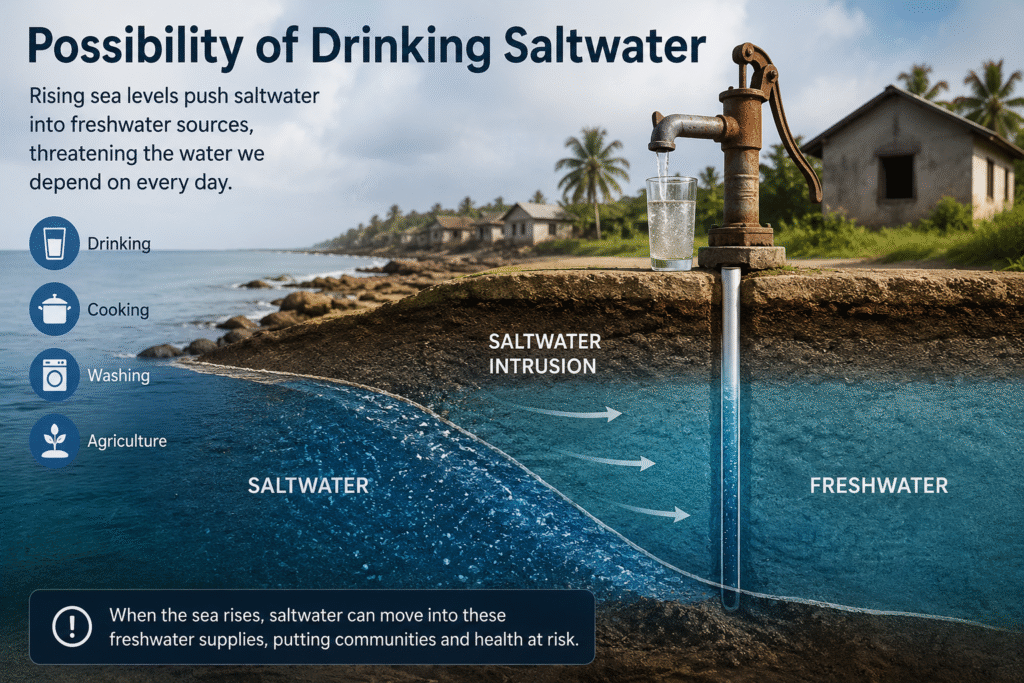
One of the more serious, but less discussed, consequences of sea level rise is saltwater intrusion into freshwater sources. Many coastal communities rely on groundwater for drinking, cooking, washing and agriculture.When the sea rises, saltwater can move into these freshwater supplies.
Imagine waking up, turning on the tap, and the water tastes salty. You cannot drink it properly. You cannot cook with it easily. You may have to buy clean water or bring it from far away. For a middle-class family, this is expensive. For a poor family, it is a daily burden.
Farmers also suffer from salty water. When salt enters the soil, crops do not grow the same way.Land that once produced rice, vegetables, fruit or other crops can slowly become poor. Farmers earn less. Food supply is affected. Prices can increase.
So sea level rise is not only a problem for people living right next to the beach. It can affect food, water, and the cost of living.
Cities Would Be More Expensive to Defend
Coastal cities would have to shell out huge amounts of cash to protect themselves. Governments may need to construct sea walls, improve drainage, elevate roads, protect ports and ban construction in dangerous areas.
But this is easier said than done.
Many cities face traffic, inadequate drainage, waste management, housing pressure and lack of clean water. Adding sea level rise to these problems makes everything harder. Poor countries may not have enough budget to protect every area.
Even rich cities cannot protect everything forever. At some point, the leaders will have to make a decision on which areas to save first and which areas are too risky.These decisions can create anger because every community wants protection. No one wants to hear that their neighborhood is not a priority. There are some places which are most beautiful to visit, will be under water.
That is why early planning is important. Waiting until water is already entering homes is too late.
Beaches, Nature, and Tourism Would Suffer
Beaches are not only beautiful places for families and tourists. They also help local businesses . Hotels, restaurants, small shops, transport workers, tour guides, fishermen and many other people rely on coastal activity. Sea levels could go up and beaches could get smaller. Sand can be washed away. Some places may become unsafe for visitors. Tourism can go down, and people who depend on it can lose income.
Nature also gets damaged. Mangroves, wetlands, and coastal forests protect land from waves and storms. They are like natural shields. They also provide homes for fish, birds, crabs, and many other living things.
When these natural areas disappear, the coast becomes weaker. Then waves and storms hit people directly. In simple words, protecting nature is also protecting ourselves.
The Economy Can Also Be Hit
Many important economic places are built near the sea. Ports, factories, airports, power plants, markets, and business centers are often close to coastlines. If these areas flood, the damage can affect the whole country.
A flooded port can delay imports and exports. Factories may stop working. Roads may close. Workers may lose daily wages. Goods may become more expensive. Even people living far away from the coast can feel the impact.
This is why sea level rise is not only an environmental issue. It is also an economic issue. It can affect trade, jobs, prices, and business confidence.
Poor People Would Suffer First
The sad truth is that sea level rise will not hurt everyone equally. Rich people can move to safer places, build stronger homes, buy insurance, or rebuild after damage. Poor people usually do not have these choices. The overall world birth rate is also falling.
Many poor families live in risky areas because rent is cheaper there. Some earn through fishing, farming, small shops, or daily wage work. If floods come often, they lose income again and again.
This is why sea level rise is also a fairness issue. Many poor communities did not cause climate change, but they are often the first to suffer from it.
What Can We Do?
Sea level rise cannot be stopped in one day, but the damage can be reduced. Countries need to reduce pollution, use cleaner energy, protect forests, and save mangroves and wetlands.
Cities need better planning. Homes should not be built carelessly in dangerous coastal areas. Drainage systems should be improved. People in risky areas should be warned early and supported properly.
Most importantly, governments should not wait until disaster happens. Helping people before they lose everything is always better than helping them after.
Final Thoughts
If sea levels keep rising, the world will face more floods, stronger storm damage, salty drinking water, damaged farms, shrinking beaches, weaker coastlines, and families forced to leave their homes.
But this issue is not only about the ocean. It is about people. It is about a mother worried about dirty water outside her home. A fisherman worried about his income. A farmer worried about salty soil. A shopkeeper worried about fewer customers. A child wondering why school is closed again because of flooding.
The sea may be rising slowly, but the pain it can bring is very real. We still have time to reduce the worst damage, but we cannot keep ignoring the warning signs. In the end, sea level rise is not just about water moving closer to land. It is about homes, food, work, health, and the future our children will inherit.