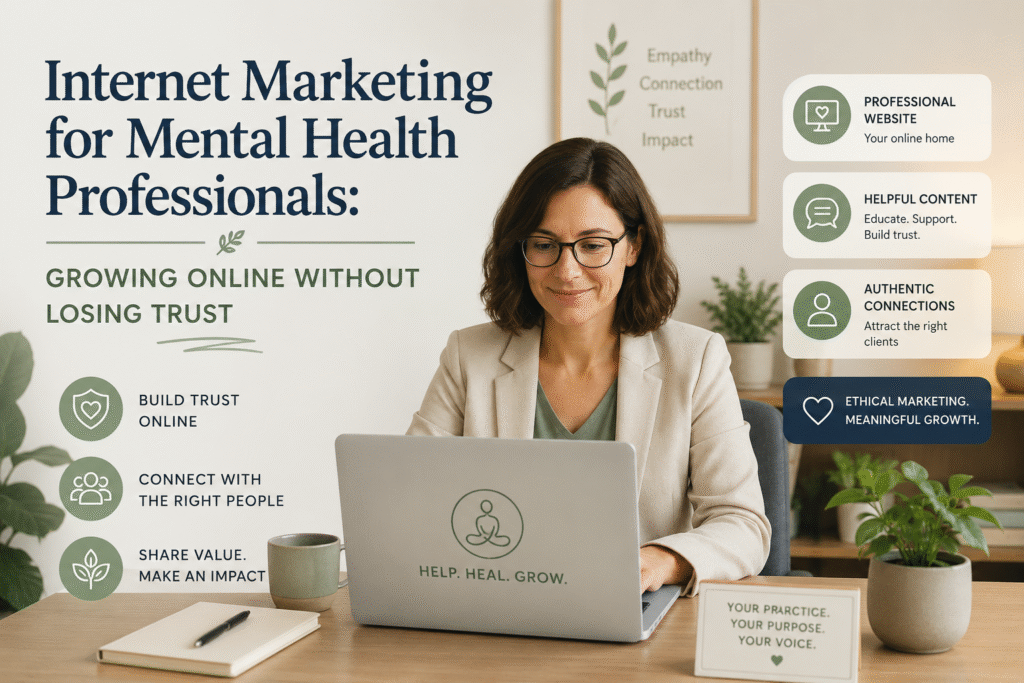

Internet marketing sounds simple on paper. Build a website, write some content, run ads, get clients.
For mental health professionals, it’s never that simple. Therapy, counseling, and psychological services sit in a sensitive space. People don’t search for a therapist the same way they search for a restaurant or a phone repair shop. Most of the time, those searches happen quietly, often during personal struggle, and usually with hesitation. That’s why internet marketing in mental health isn’t just about visibility. It’s about how you show up when someone is already unsure, vulnerable, or overwhelmed.
Why Mental Health Marketing Is Different
Mental health professionals aren’t selling convenience. They’re offering care, safety, and understanding. A poorly written ad or an overly aggressive landing page doesn’t just fail, it can actively push people away.
Many therapists avoid marketing altogether because it feels uncomfortable. They worry about appearing commercial, unethical, or insincere. Those concerns are valid. But avoiding the internet completely creates another problem: patients who genuinely need help can’t find you. The goal of mental health marketing isn’t persuasion. It’s presence.
How People Actually Search for Mental Health Support
Most people don’t wake up thinking, “I should compare therapists today.” They search because something feels off.
Common searches sound like:
- “Therapist near me”
- “Online counseling for anxiety”
- “How to know if therapy will help”
- “Is it normal to feel like this”
These aren’t curiosity-based searches. They’re emotional. Your online presence should reflect that reality.
A calm tone, clear explanations, and straightforward language work better than polished marketing copy. People want to feel safe before they ever think about booking an appointment.
Your Website Is Not a Sales Page
For mental health professionals, a website is closer to a digital waiting room than a sales funnel.
What matters most:
- Clear explanation of who you help
- Your qualifications and experience
- A sense of approachability
- Simple, non-intimidating navigation
- Privacy-conscious design
Overdesigned websites with loud calls-to-action often feel wrong in this space. A simple “Request a confidential consultation” is far more effective than “Book Now” or “Limited Slots Available.”
Trust builds quietly.
SEO for Mental Health Professionals (Without Chasing the Algorithm)
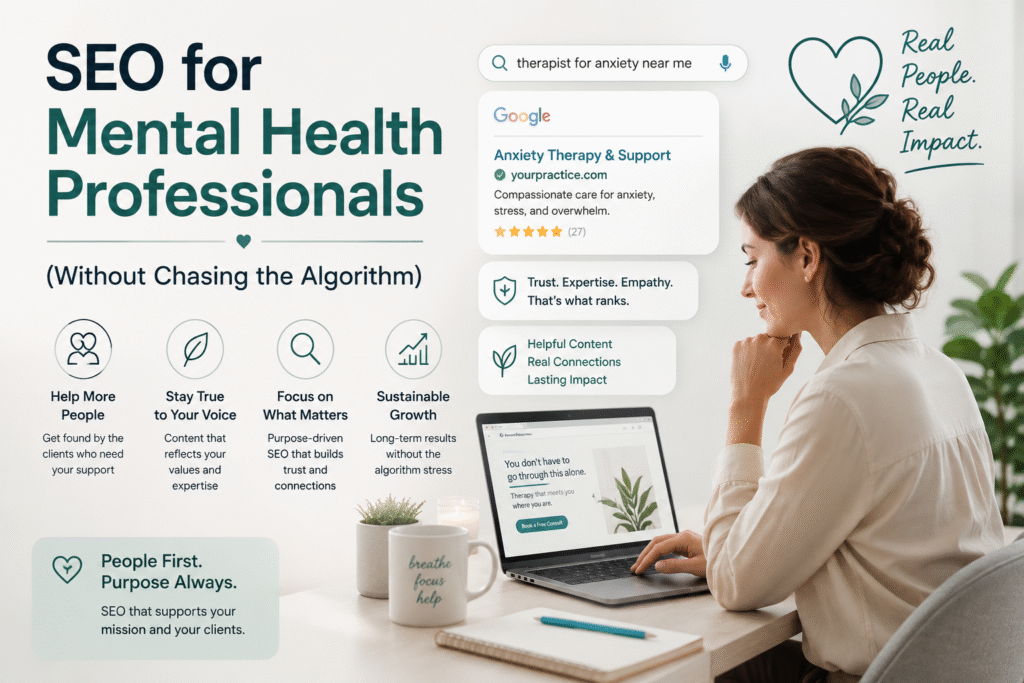
Search engine optimization is one of the most sustainable ways for therapists and clinics to grow online, especially locally. But healthcare SEO comes with responsibility.
Google treats mental health content as high-stakes information. This means vague advice, exaggerated claims, or generic content won’t perform well long term.
What actually works:
- Location-based service pages
- Clear descriptions of treatment approaches
- Educational blog content written with care
- Author transparency and credentials
- Helpful FAQs that reduce uncertainty
SEO here isn’t about gaming rankings. It’s about answering real questions with accuracy and restraint.
Content Marketing That Respects Boundaries
Content marketing is often misunderstood in mental health. It’s not about diagnosing people through blog posts or replacing therapy sessions with articles. Good content does one thing well: it reduces fear.
Topics that perform well include:
- What happens in a first therapy session
- Differences between therapy approaches
- When to consider professional help
- How mental health treatment usually works
This type of content doesn’t push people to book immediately. It helps them feel more comfortable with the idea of reaching out. That’s where conversion happens naturally.
Local Visibility Matters More Than Being Everywhere Online
Most mental health professionals don’t work nationally, even if their website technically can be seen anywhere. Therapy is usually tied to a city, a region, or at least a licensed area. Trying to attract attention from everywhere often creates noise instead of results. What actually helps is being easy to find where you already work. That usually means your local presence is accurate and boring in the best way possible. Your Google Business Profile is complete. Your phone number and address match everywhere they appear. Your website makes it clear who you help and where you’re located. None of this feels exciting, but it builds confidence quietly.
When someone searches for help close to home, Google tends to favor practices that look stable and consistent. Calm, well-maintained local signals usually win over flashy websites that try too hard to stand out.
Social Media Is About Familiarity, Not Selling
Social media can support mental health marketing, but it stops working the moment it feels like advertising. People don’t open Instagram or LinkedIn hoping to be convinced to start therapy. They’re scrolling, absorbing, and moving on.
Content that explains, reassures, or simply reflects real experiences tends to land better. Short insights, educational thoughts, or professional observations help people recognize your voice over time. That familiarity matters more than reach.
Sharing stories requires extra care. Even when anonymity is protected, anything that feels performative can damage trust fast. For many professionals, social media isn’t a lead engine. It’s a slow, background layer of credibility.
Paid Advertising Requires Restraint
Paid advertising can work in mental health, but only when they don’t push too hard. In this space, aggressive language, urgency-driven messages, or emotional triggers often fall flat.
Ads that clearly describe what you offer, who you serve, and how to learn more tend to resonate best. Educational landing pages usually build more confidence than sales-driven ones.
Reviews and Reputation Need a Lighter Touch
Reviews influence decisions, but mental health professionals have to approach them differently than most businesses. Asking for feedback is fine. Pressuring or incentivizing it is not. When reviews appear, responses should stay general and professional. No details. No explanations. A simple acknowledgment often communicates more trust than a long reply ever could.
A small number of thoughtful reviews usually carries more weight than a long list of generic praise.
Emails That Actually Feel Nice to Get
Let’s face nobody enjoys a crowded inbox. When it comes to mental health, emails work best when they’re short, useful, and a little thoughtful. A quick tip, a gentle reminder, or a tiny update that actually matters are the emails people don’t scroll past.
Send too many, though, and people start tuning out. A few well-timed messages go a lot further than a constant flood. It’s about staying helpful without feeling pushy.
Trust Is in the Small Stuff
You don’t earn trust overnight. It sneaks in slowly, in details you might not even notice at first. Credentials that are easy to see, a simple disclaimer, a website that feels safe these tiny things tell someone, “Yeah, it’s okay to reach out here.” Honest, clear language beats clever slogans every single time.
Final Thought
Marketing mental health services will probably always feel a little uncomfortable and that’s not a bad thing. It keeps the focus on care instead of conversion. The practices that grow steadily online aren’t usually the loudest ones. They’re the ones that show up consistently, communicate clearly and respect the fact that someone on the other side of the screen might already be having a hard day.