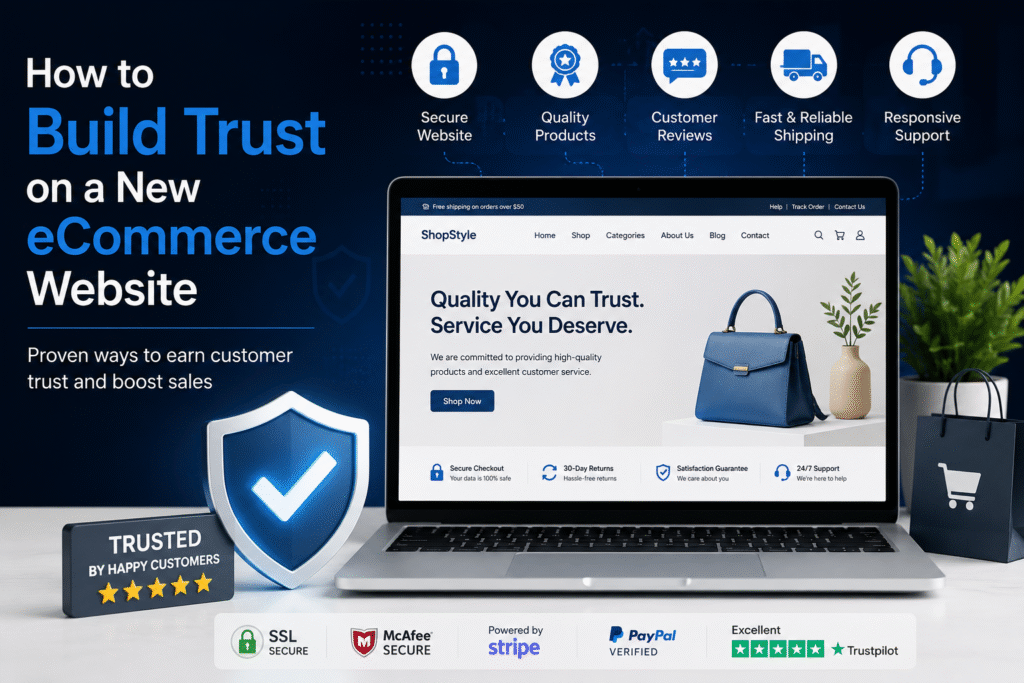

Starting a new eCommerce website is exciting… but also frustrating in one specific way.
You can have a great product, a clean-looking website, even decent traffic coming in and still, people don’t buy.
Not because your product is bad.
Not because your prices are too high.
But because they don’t trust you yet.
And honestly, that’s fair.
Think about it from a customer’s perspective.its most probably their first visit on your site . They don’t know your brand. They’ve never heard of you. And now you’re asking them to enter their card details?
That’s a big ask.
Trust is the real currency in eCommerce especially when you’re new. And the good news is, you don’t need to fake it or manipulate people to earn it. You just need to understand how people think and remove the doubts they naturally have.
Now look at this in a simple way.
First Impressions Matter More Than You Think
People start judging it quickly when they visit for the first time.
Not minutes. Seconds.
If your site looks outdated, messy, or slow, people won’t sit there analyzing why. They’ll just leave.
A clean design doesn’t mean something overly fancy. It means simple, clear, and easy to navigate.
Your homepage should instantly answer three basic questions:
What are you selling?
Who is it for?
Why should someone care?
Also, things like spelling mistakes, broken pages, or inconsistent design quietly damage trust. People might not consciously notice them but they feel it.
Be Clear About Who You Are
One of the biggest mistakes new stores make is hiding behind the brand.
People don’t trust faceless websites.
Even a simple “About Us” page can make a huge difference. You don’t need a dramatic story. Just be honest.
Why did you start this?
What problem are you trying to solve?
What makes your product worth it?
If possible, show a real person behind the brand. A name. A photo. Something human.
Because people trust people, not just logos.
Product Pages Should Answer Every Doubt
Most new eCommerce stores treat product pages like a basic listing.
That’s a mistake.
Your product page is where trust is either built… or lost.
Think about what a customer is wondering:
Will this actually work?
Is it good quality?
What happens if I don’t like it?
Now answer all of that directly.
Use clear descriptions, not generic copy.
Show multiple images from different angles.
If possible, include real-life usage photos or videos.
And don’t oversell.
If everything sounds “perfect,” people get suspicious. Real products have real use cases. Speak honestly.
Add Social Proof, Even If You’re New
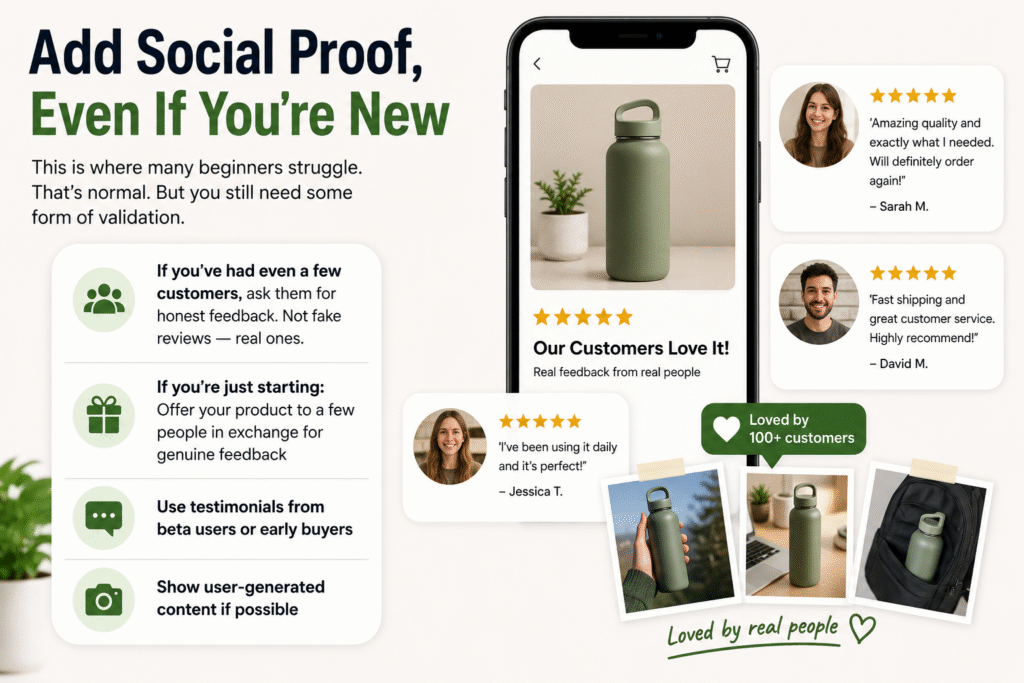
This is where many beginners struggle.
That’s normal. But you still need some form of validation.
If you’ve had even a few customers, ask them for honest feedback. Not fake reviews real ones.
If you’re just starting:
Offer your product to a few people in exchange for genuine feedback
Use testimonials from beta users or early buyers
Show user-generated content if possible
Even a handful of real reviews is better than none.
Because when people see others trusting you, it reduces their hesitation.
Make Your Policies Easy to Find (and Understand)
This is something people don’t talk about enough.
Customers don’t just care about the product. What really sits in the back of their mind is, “what happens if something doesn’t go as expected?”
What’s your return policy?
How long does shipping take?
What if the product arrives damaged?
If this information is hard to find, people assume the worst.
Keep your policies simple and visible:
Clear return/refund policy
Transparent shipping details and AI can help in this regard
Contact information that actually works
And avoid complicated language. Write it like you’re explaining it to a real person.
Show That Payments Are Safe
When someone reaches checkout, this is the most sensitive moment.
They’re about to trust you with their money.
Even small doubts here can kill the sale.
Add trust signals like:
Secure payment icons
SSL (HTTPS) this is non-negotiable
Recognizable payment methods
But more importantly, make the checkout process feel smooth and normal.
If it feels sketchy, people won’t take the risk.
Don’t Hide Your Contact Information
A surprising number of new stores don’t provide clear contact details.
That’s a red flag.
Even if customers never contact you, they want to know they can.
At minimum, include:
Email address
Contact form
Optional: phone number or WhatsApp
This alone makes your store feel more legitimate.
Be Honest About Shipping Times
One of the fastest ways to lose trust is disappointing delivery expectations.
If your product takes 10–15 days to arrive, don’t say “fast shipping.”
Say exactly what it is.
People are okay with waiting if they know upfront.
What they don’t like is feeling misled.
Transparency builds trust faster than speed.
Content Builds Trust Quietly
Most of the time people don’t buy when they visit for the first time.
They browse. They compare. They think.
This is where content helps.
Simple things like:
Blog posts
Buying guides
FAQs
These show that you understand your product and your audience.
It also positions your store as something more than “just trying to sell.”
For example, if you sell skincare, explain how to choose the right product. If you sell tech, explain how it works.
This reduces uncertainty and uncertainty is the enemy of trust.
Consistency Matters More Than Perfection
You don’t need everything to be perfect from day one.
you need consistency.
People notice if your home page is premium and product page looks cheap
If your social media says one thing and your website says another, people hesitate.
Trust is built when everything feels like it belongs together.
Don’t Try to “Trick” the Customer
This is important.
Avoid fake urgency, fake discounts, or misleading tactics.
People are smarter than that now.
Focus more on quality and clarity.
That might feel slower in the beginning… but it builds something sustainable.
Give People a Reason to Choose You
At the end of the day, trust alone isn’t enough.
People also need a reason to pick you over others.
Ask yourself honestly:
What makes your store different?
Why would someone choose you over a bigger, more established brand?
It’s a fair question and honestly, you don’t need some massive, game-changing advantage to compete.
Sometimes, it’s the smaller things that make the difference.
You might just be quicker to respond when someone reaches out with a question.
Your product descriptions just explain things properly so people get what they’re buying without having to guess or overthink it.
And instead of trying to appeal to everyone, you might be speaking directly to a specific kind of customer.
Final Thought
Building trust on a new eCommerce site isn’t about doing one big, impressive thing.
It’s usually the opposite.
It’s about fixing the little gaps that make people hesitate. The unclear details , missing answers. The small doubts that quietly hold someone back from clicking “buy.” Remove those, step by step, and everything starts to feel easier for you and for your customer.